
Home

Your Account

Shopping Cart

Contact

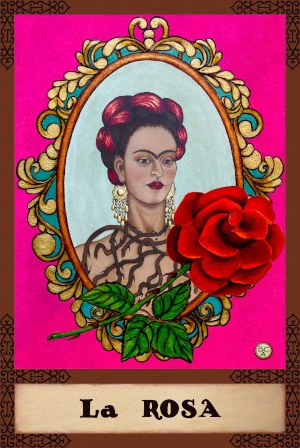
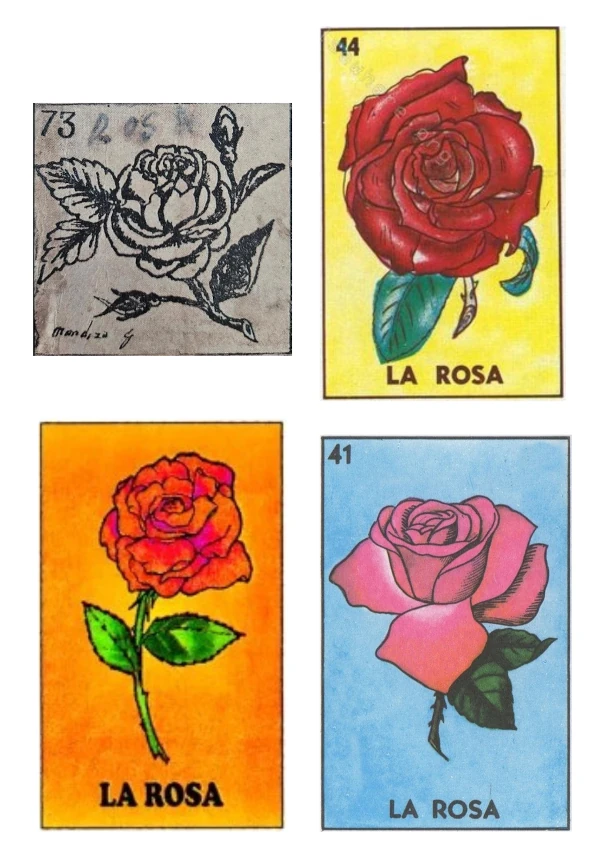
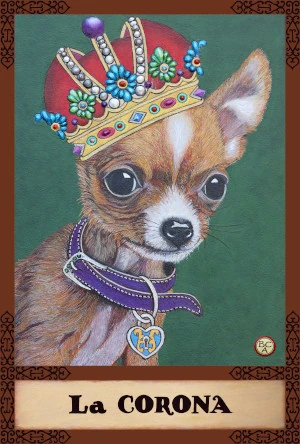
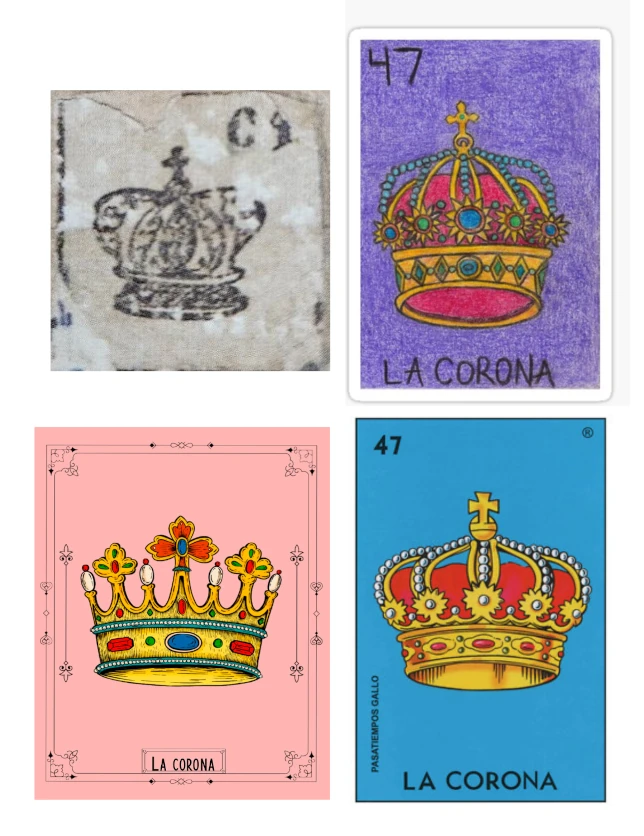
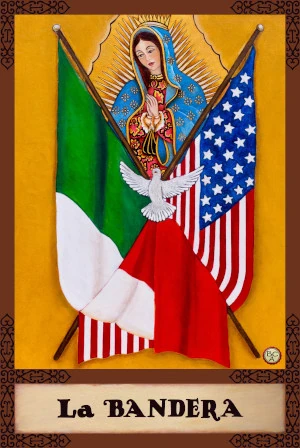
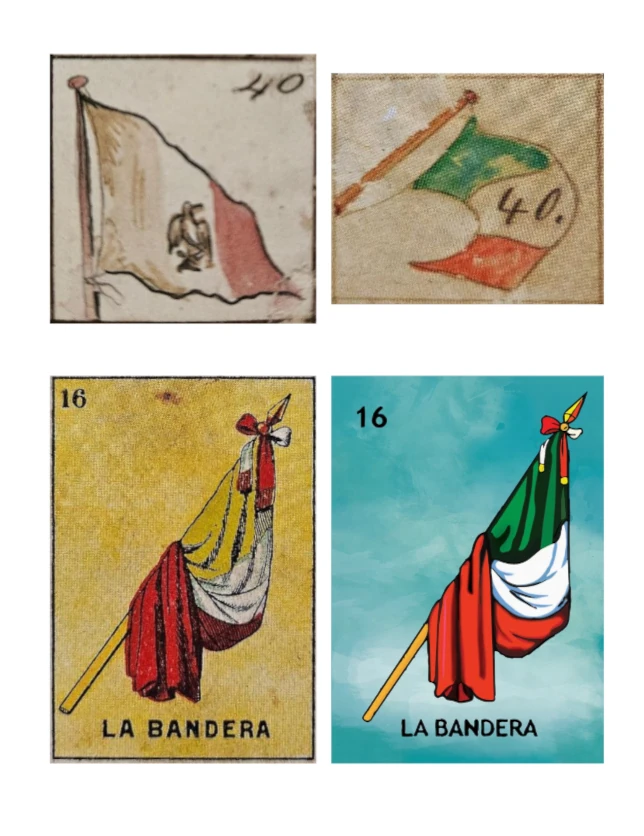
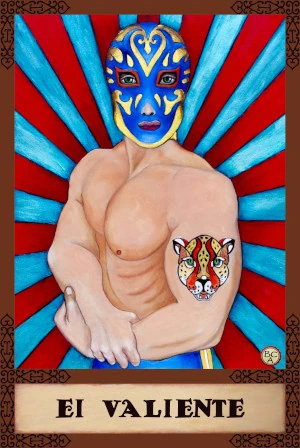
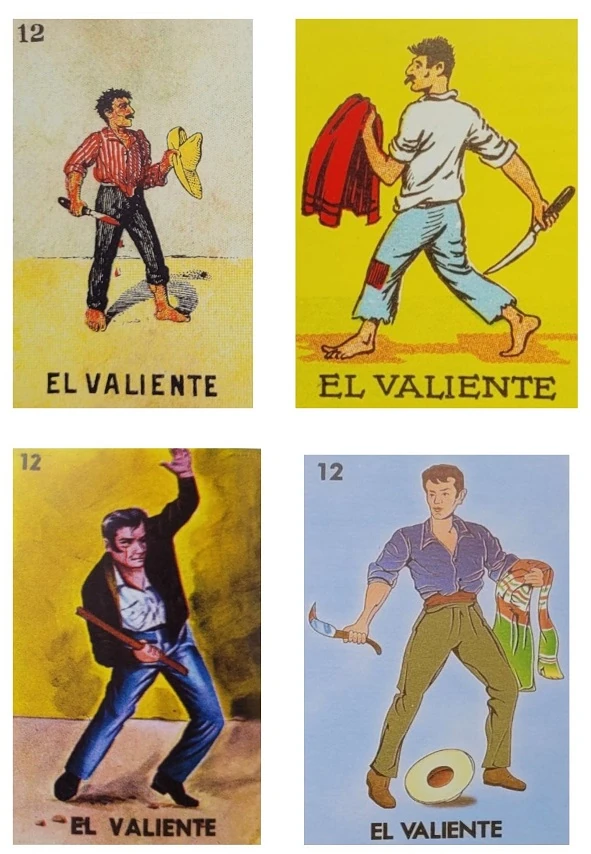
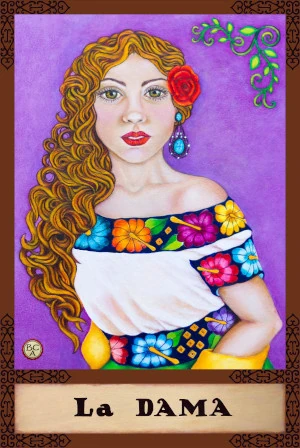
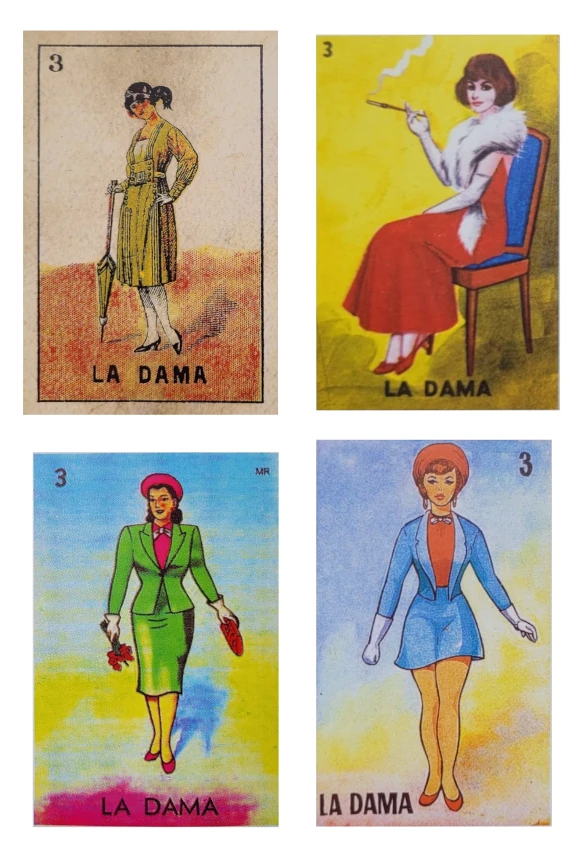
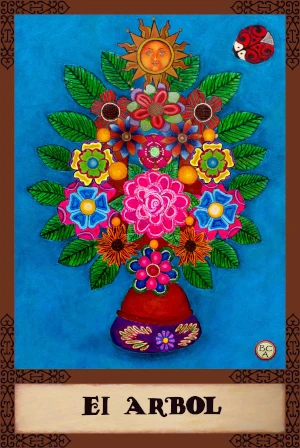
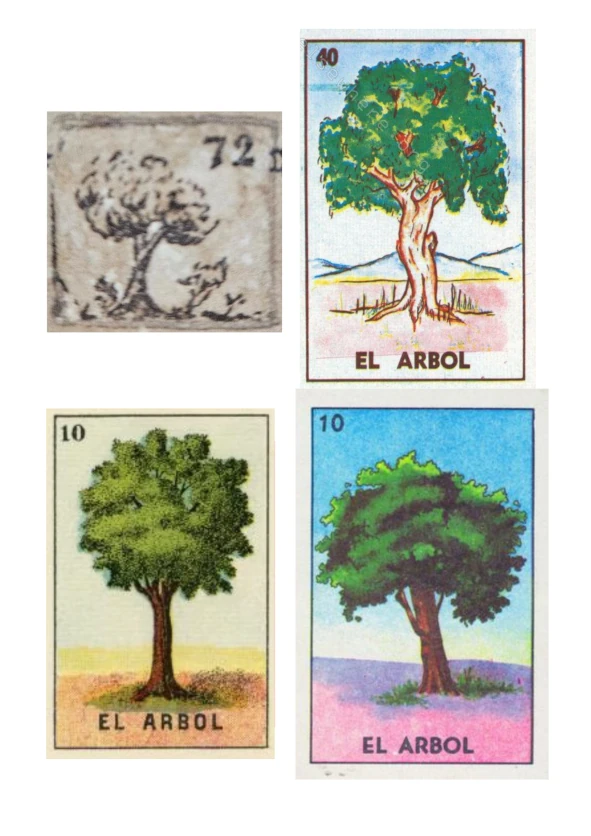
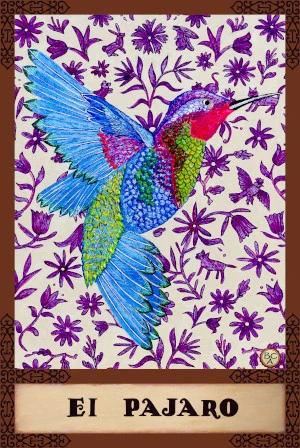
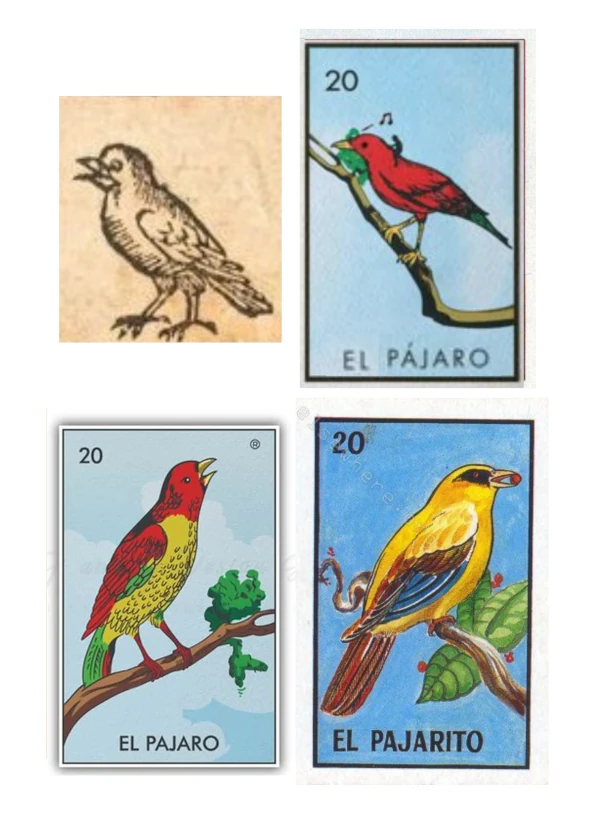
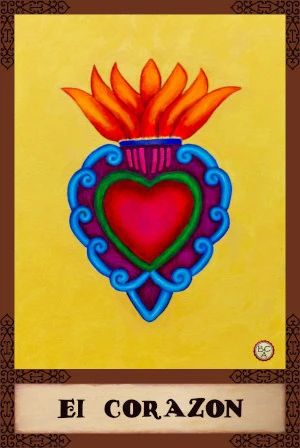
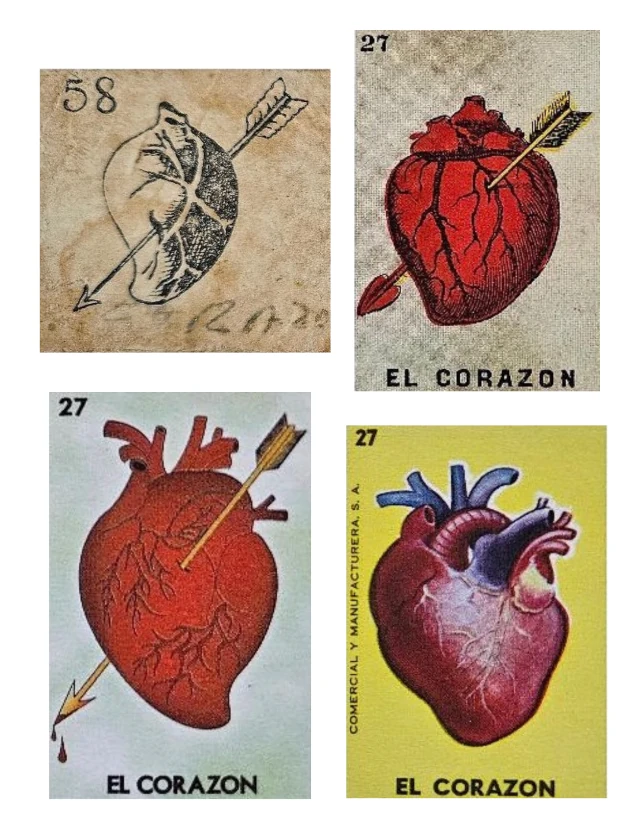
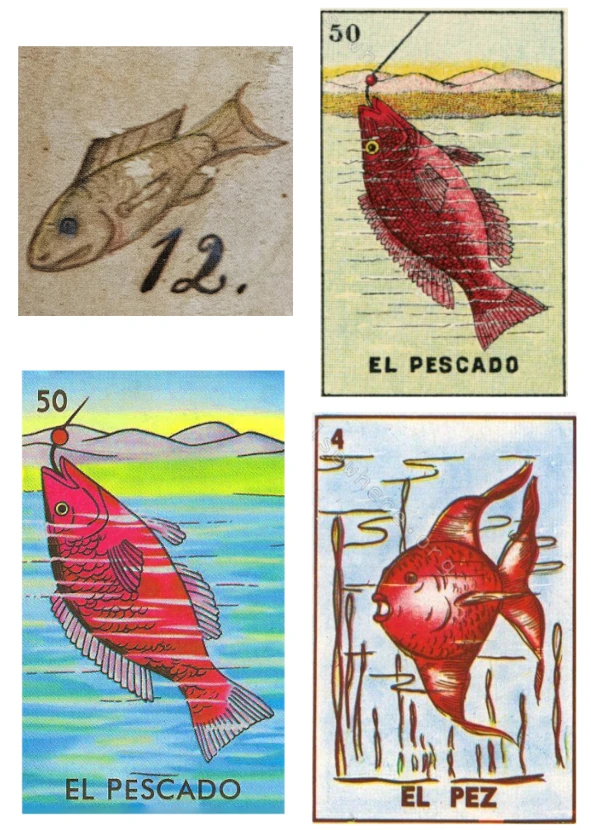

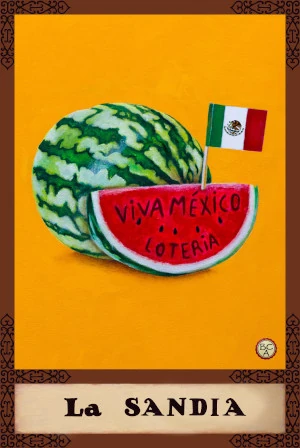
Lotería is a classic board game that has entertained Mexican families for centuries. Similar to Bingo, it replaces letters and numbers with richly illustrated images. The game originated in Italy during the Middle Ages, later traveling to Spain before arriving in Mexico toward the end of the 17th century, where it became deeply rooted in popular culture.
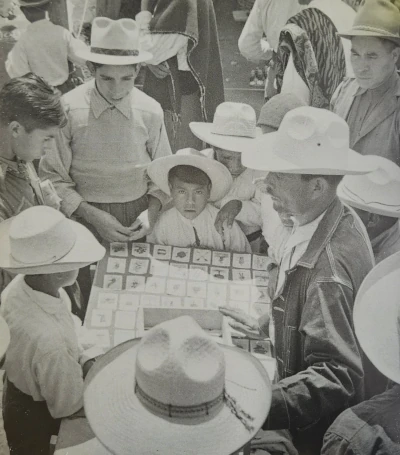
A traditional Lotería deck consists of 54 different cards and an indefinite number of tables, each displaying 16 images. At the start of the game, each player receives a table, while the person responsible for calling out the cards is known as the gritón (literally, “the screamer”). The gritón randomly draws cards from a sack, announcing each one aloud and often embellishing it with a playful or poetic phrase. These improvised verses add a personal, humorous, and theatrical dimension to the game. Players mark their tables as the images appear, and—just as in Bingo—the first to complete a table wins, proclaiming “¡Lotería!”
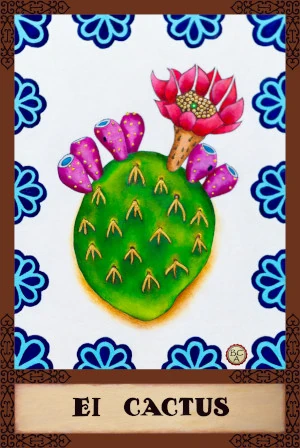
Early Lotería cards were hand-painted and depicted imagery from their country of origin. Drawing inspiration from traditional lotería themes, Bertha Cuéllar presents her own interpretations with a distinctly personal vision and an unmistakably nationalistic sensibility.

Tenochtitlan, founded in 1325 on an island in Lake Texcoco, became the capital of the Aztec Empire and the site of present-day Mexico City. It was renowned for canals, causeways, and aqueducts, supporting transportation, trade, and fresh water distribution. These innovations fueled the city’s rapid growth, making it the largest and most sophisticated urban center in the pre-Columbian Americas. In less than two centuries, Tenochtitlan reached a level of development many European cities had not yet achieved. By 1519, when Spanish Conquistador Hernán Cortés and his soldiers first entered the Aztec capital, Tenochtitlan was already larger than London, Paris, and Rome, despite those cities being thousands of years old. Bernal Díaz del Castillo, chronicler known for his firsthand account of the conquest, later wrote: “Some of our men even asked whether the things that we saw were not a dream.”
Tenochtitlan’s lakes were part of a vast wetland system in central Mexico, now mostly vanished except for remnants like Lake Xochimilco south of Mexico City. These wetlands are the last remaining natural habitat of the axolotl, also known as the ajolote. The name “axolotl” comes from the Nahuatl words atl (water) and Xolotl, a deity associated with lightning and transformation. Although often called a “walking fish,” the axolotl is actually an amphibian, famous for color variations such as the pink albino morph, and the baby-like features and perpetual smile that have boosted its popularity on social media. Today, the axolotl has become a powerful cultural symbol, appearing in murals and street art throughout Mexico City, which links the modern metropolis to its ancient might.


Click to learn much more about Axolotls:

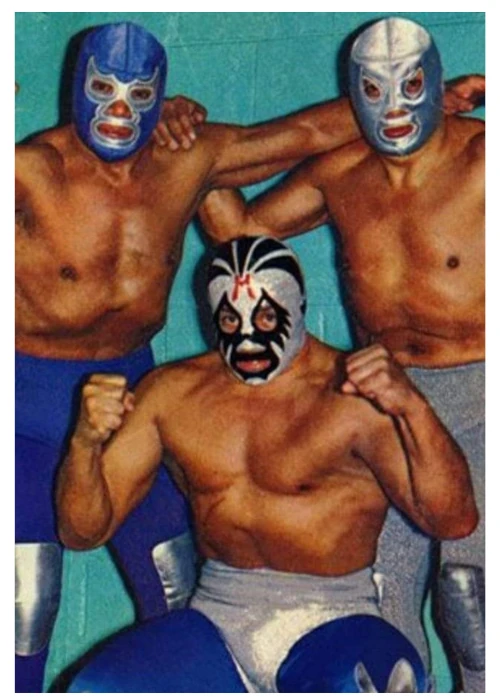
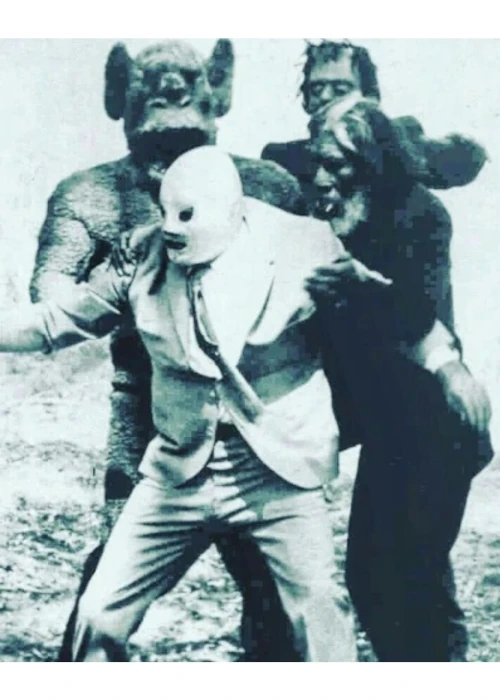
Lucha libre is a cultural phenomenon celebrated for its dazzling acrobatics, theatrical storytelling, and vividly colored masks. Blending spectacle with timeless narratives of heroism and rivalry, it has captivated audiences far beyond Mexico and become one of the country’s most recognizable traditions.
Popularized by legendary luchadores such as Blue Demon, Huracán Ramírez, and Mil Máscaras, lucha libre masks are far more than costumes. They symbolize identity, honor, and mythology, transforming wrestlers into larger-than-life personas whose masks carry deep cultural meaning. Over time, these lucha libre masks have transcended the ring to become enduring symbols of Mexican culture.
Click to learn much more about:
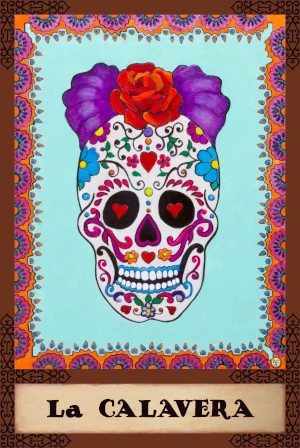
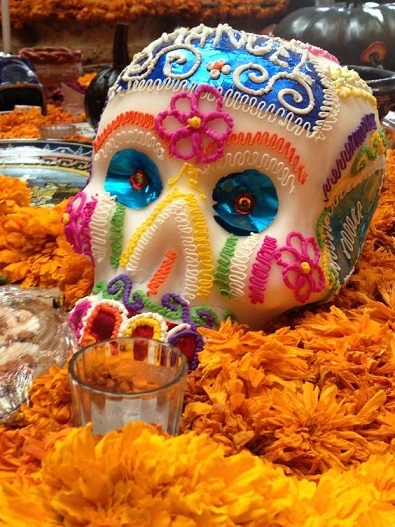
Sugar skulls, or Calaveritas de Azúcar are delicately crafted from sugar and egg whites. Far more than decorative objects, these colorful creations occupy a central place on Día de Muertos altars and, like many Mexican traditions, are deeply rooted in symbolism and history.
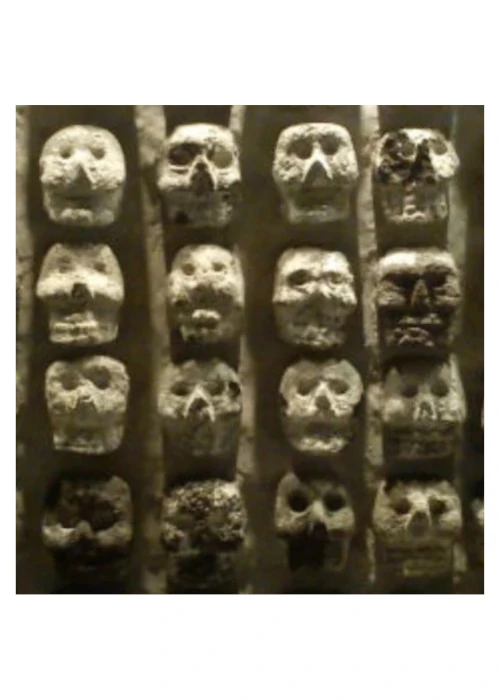
The origins of calaveritas trace back to much earlier pre-Hispanic practices. In Aztec culture, human skulls—often obtained through sacrificial rituals—were incorporated into ceremonial life as powerful symbols of death, rebirth, and the cyclical nature of existence. With the arrival of the Spanish conquistadors and the process of evangelization, the use of human remains was strictly prohibited. In an effort to accommodate Indigenous traditions while aligning them with Christian practices, symbolic sugar skulls gradually replaced real skulls. Today, sugar skulls serve not only as offerings to honor the dead but also as joyful affirmations of life, remembrance, and love.
Calaveritas de Azúcar is one of many examples of cultural syncretism, blending pre-Hispanic beliefs and practices with Catholic-Spanish traditions introduced during the colonial period.
Click to learn much more about:

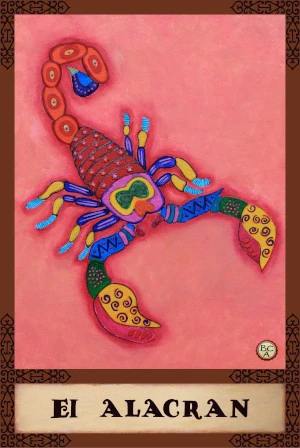
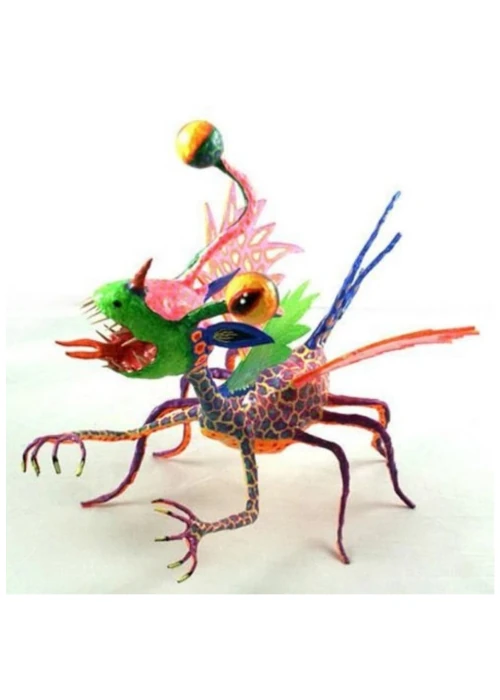
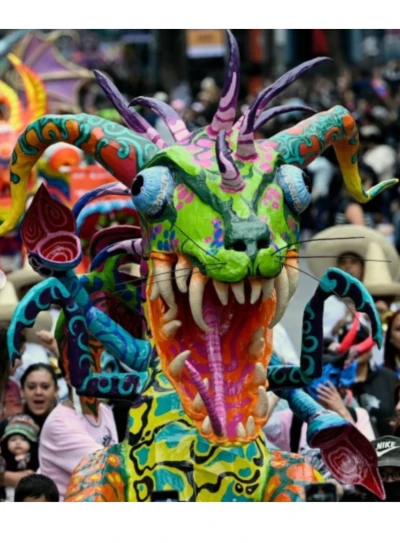
Alebrijes are sculptures of imaginary beings that fuse physiological elements characteristic of insects, mammals, birds, and reptiles. These fantastical, surrealist creations are traditionally made from cardboard and paper, reinforced with a wire armature, and painted in vibrant colors with intricate, highly distinctive patterns.
Although several theories surround the origins of alebrijes, the most widely accepted accounts trace their beginnings to the 1930s, when Mexican artist Pedro Linares began creating fantastical creatures inspired by his dreams. His work later gained recognition among artists and collectors, helping establish alebrijes as a distinctive expression of Mexican folk art. Linares devoted more than four decades to their creation, and his legacy continues through his family and workshop, as well as through countless Mexican artists who have developed the tradition with their own styles and interpretations.
Today, this imaginative art form takes center stage in Mexico City’s annual Parade of Monumental Alebrijes, transforming the streets into a vibrant world of fantastical creatures and celebrating the creativity, craftsmanship, and enduring spirit of Mexican folk art.
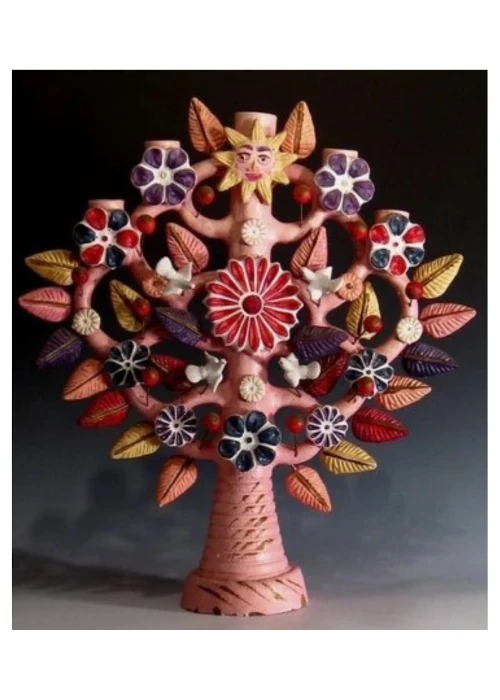
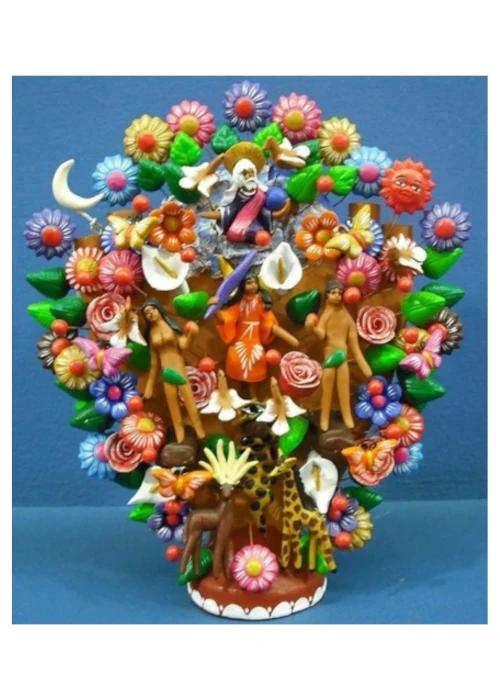
Metepec, located approximately 60 kilometers from Mexico City, is the birthplace of one of Mexico’s oldest artistic traditions: the Árboles de la Vida, or Trees of Life. These clay sculptures form part of an artisan practice that traces its origins to pre-Hispanic times. Found in many mythologies around the world, Trees of Life are rich in symbolism and meaning.
Originally, these sculptures depicted the biblical scene of the Garden of Eden. Over time, however, the Árbol de la Vida evolved beyond strictly religious themes to incorporate a wide range of decorative and symbolic elements, including flowers, suns, fruits, animals, and even skeletons. This evolution reflects the dynamic nature of Mexican popular art and its ability to adapt while preserving tradition.
Each year, the Municipality of Metepec organizes the National Pottery and Ceramics Contest: Tree of Life, an event dedicated to celebrating this tradition and promoting its continued dissemination. Unfortunately, the growing demand for these works has also led to the importation of counterfeit pieces, primarily from China. This practice poses a serious threat to both the livelihoods of Metepec’s artisans and the continuity of this centuries-old craft. In response, the Árbol de la Vida has been officially registered as an original trademark of Metepec, helping to protect and preserve this invaluable cultural heritage.
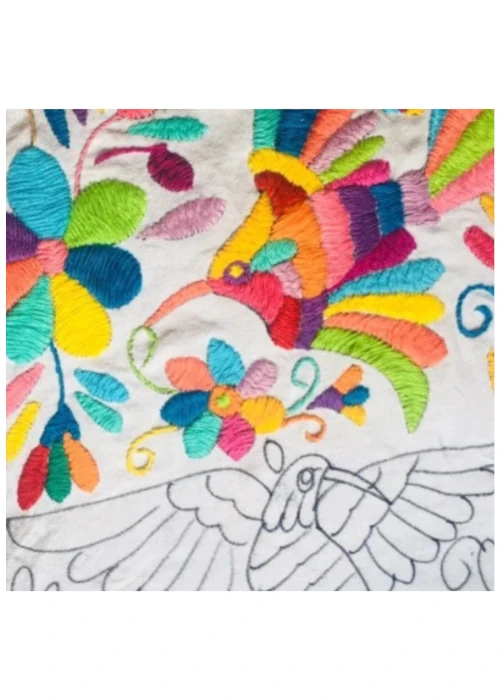

Among Mexico’s many decorative textile traditions, tenangos from the state of Hidalgo stand out as one of the richest expressions of cultural and ethnic identity. Created by the Otomi people, these single- and multicolor embroideries demand extraordinary effort, dedication, and patience; a single piece can take up to ten months to complete. Each design begins with carefully drawn or traced patterns on the fabric, which then serve as a guide for the meticulous hand embroidery that follows.
Beyond their visual beauty, tenangos function as narrative textiles. They depict scenes of daily life within Otomi communities, illustrating local flora and fauna while also recounting religious events, festivals, and carnivals. To fully understand their significance, it is important to recognize that illiteracy was once widespread among these communities. As a result, tenangos became not only an artistic form of expression but also a vital means of preserving collective memory, traditions, and cultural knowledge.
Today, tenangos continue to evolve while maintaining their symbolic essence. They are used to adorn a wide variety of objects, including bags, garments, bedspreads, and pillows.
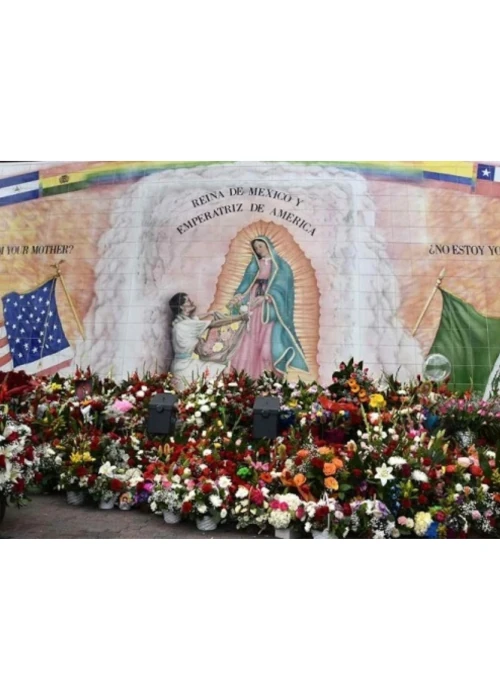
One of the most fervent devotions in Catholicism is the profound reverence that the Mexican people hold for their patron saint, the Virgin of Guadalupe. While this devotion is deeply rooted in Mexico, it extends far beyond its borders and has become a powerful spiritual presence among Mexican communities in the United States.
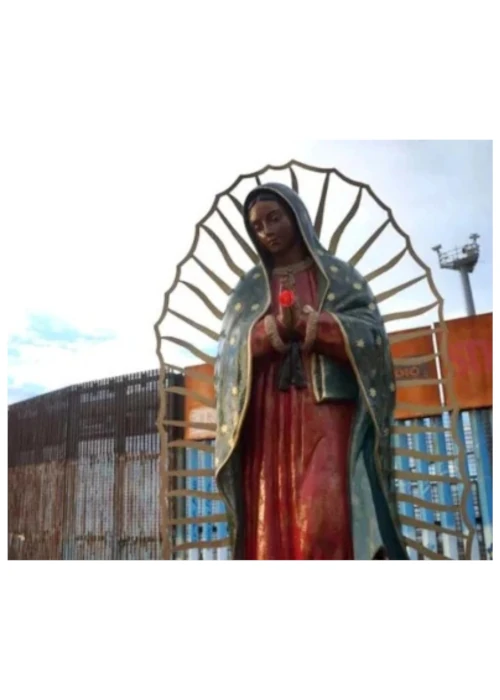
For many Mexicans who migrate for economic reasons, the journey north is marked by uncertainty, sacrifice, and hope. At the outset of their journey, migrants often turn to the Virgin of Guadalupe, asking for protection, the opportunity to find work on the other side of the border, and the possibility of one day being reunited with their families. In border cities such as Nogales, Tecate, and Reynosa, images of the Virgin are commonly found outside migrant shelters, serving as silent witnesses to countless prayers and moments of reflection.
These images offer migrants a space for introspection before crossing the border in search of a better future. Above all, the message of the Virgin of Guadalupe is one of fraternity, compassion, and reconciliation—values that transcend nations and cultures. Borders are drawn by human hands, yet the Virgin’s love is understood as unconditional, extending equally to all people, regardless of nationality, origin, or race.
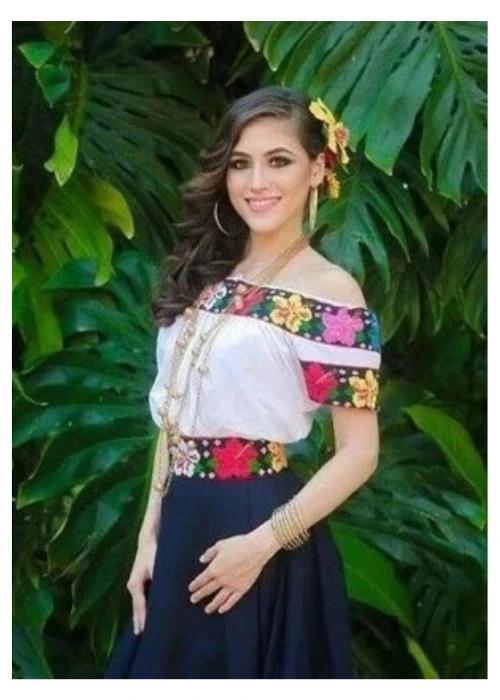
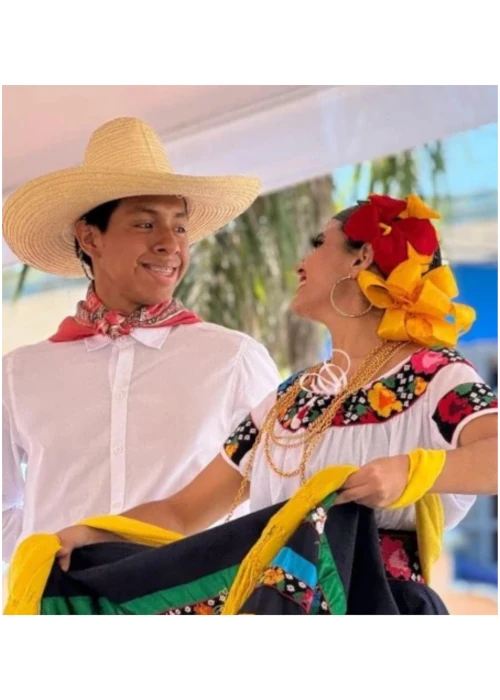
Mexico is rich in culture and tradition, with each state expressing a distinct identity through its art, cuisine, dance, music, and attire. Among the country’s most vibrant traditional garments are the women’s dresses of Tabasco, which are proudly worn during religious ceremonies, galas, festivals and dances.
Designed for Tabasco’s warm climate, these outfits feature lightweight white blouses with oval necklines and shoulder-length sleeves, adorned with vibrant hibiscus (cayena) motifs against a dark background. The hibiscus symbolizes Tabasco’s tropical beauty and fertility. The ensemble is completed with a shawl draped across the back and arms, while a flower adorning an ear adds a distinctive touch of femininity and grace.
These traditional dresses come to life during zapateado dances, where rhythmic footwork and percussive steps echo the sounds of regional music. As dancers move, the flowing skirts accentuate each stomp and turn, transforming the zapateado into a visual and auditory celebration of Tabasco’s heritage—blending movement, music, and costume into a powerful expression of cultural pride.
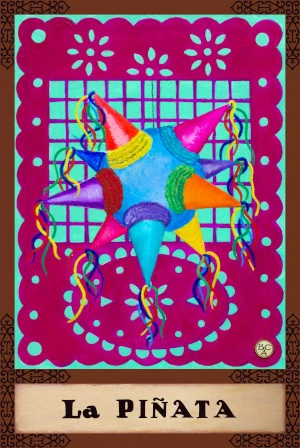
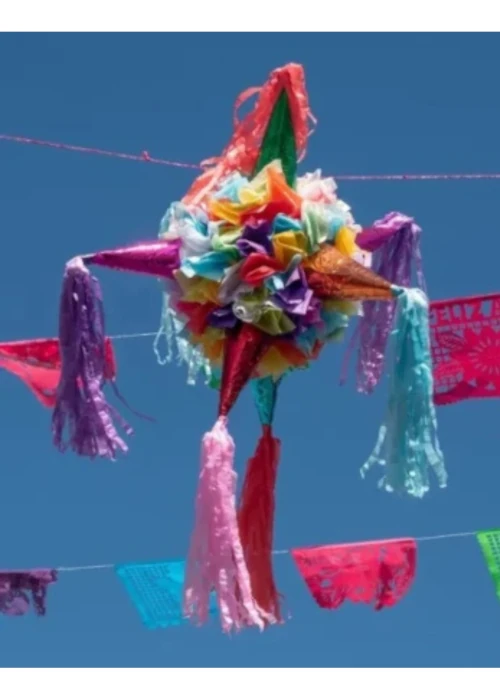
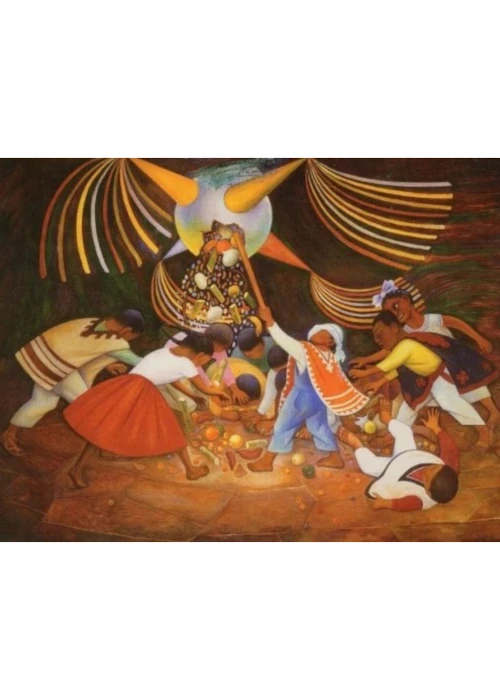
One of Mexico’s most recognizable cultural icons is undoubtedly the colorful piñata. Traditionally filled with candy or fruit and suspended from a rope, the piñata is broken during celebrations by a participant who is blindfolded and spun thirty-three times to induce disorientation. Once blind and dizzy, the challenge is to strike the piñata with a wooden stick until it breaks.
Beyond their festive appearance, piñatas are deeply embedded with Catholic symbolism. During the colonial period, they were used as tools for evangelization. The spikes of the piñata represent the seven deadly sins, while the wooden stick symbolizes the force through which evil is defeated. The blindfold signifies an act of faith in God, and the thirty-three turns correspond to the number of years Jesus Christ is believed to have lived on Earth. The resulting disorientation reflects the confusion of the human soul in a world filled with sin.
The bright colors that decorate the piñata represent the temptations of the earthly world, often associated with Satan, while the sweets hidden inside symbolize the blessings and rewards of the Kingdom of Heaven. These treats are bestowed upon those who overcome evil—symbolically achieved through the breaking of the piñata itself.
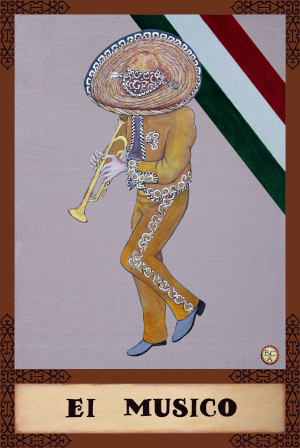
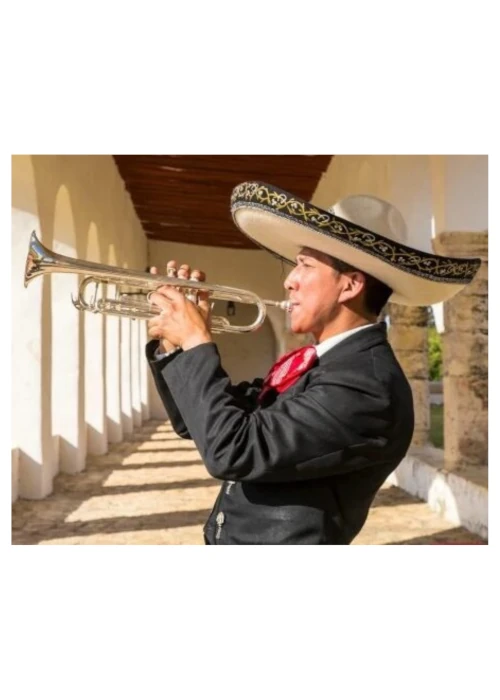
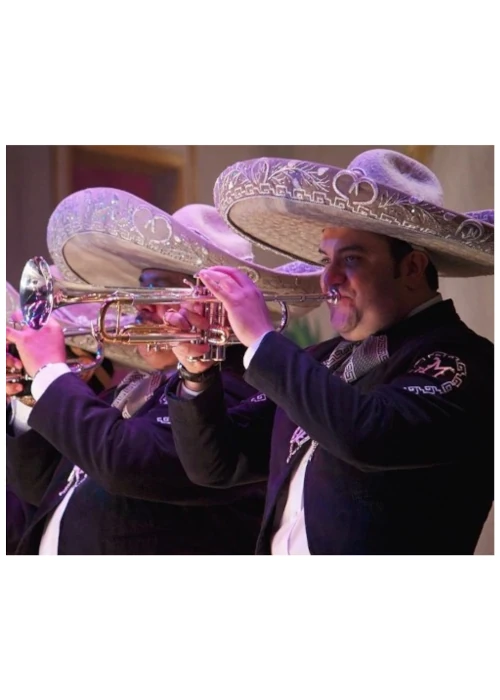
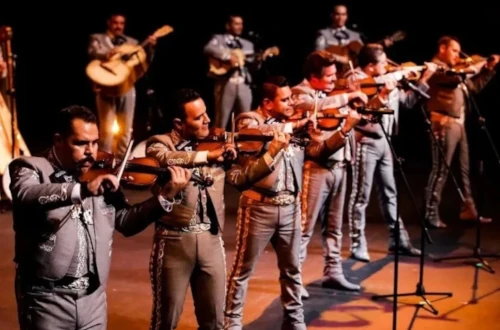
What Mexican has not sung—after a shot of tequila, or perhaps two—to the sound of a mariachi? The presence of a mariachi ensemble is almost essential at celebrations of all kinds, from weddings and birthdays to national holidays and public festivities. Like many Mexican traditions, mariachi music is the result of a rich fusion between Indigenous and Spanish influences.
The musical groups that preceded modern mariachi originated in Cocula, in the state of Jalisco, and date back to precolonial times. When Spanish missionaries arrived in the region, they quickly recognized the locals’ remarkable ability to learn and reproduce melodies. In a strategic act of cultural blending, they encouraged the combination of Indigenous instruments—such as shells and clay flutes—with European ones, including violins and guitars. Music thus became a powerful tool for evangelization, allowing Indigenous communities to express devotion to the Virgin Mary through song.
Today, mariachi music has transcended national borders and achieved international recognition. Ensembles can be found performing as far away as Japan and South Africa, often singing in local languages. In recognition of its historical, cultural, and artistic significance, UNESCO officially inscribed mariachi music on the Representative List of the Intangible Cultural Heritage of Humanity in 2011.
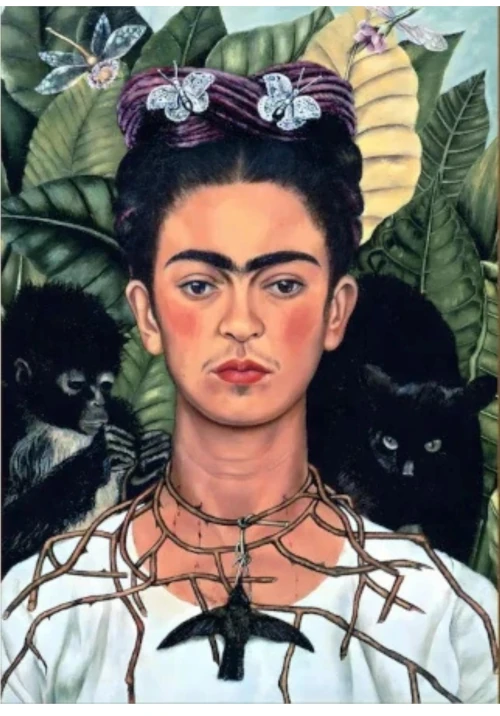
Frida Kahlo is undoubtedly the most internationally recognized Mexican artist. Among her most celebrated works are her self-portraits, which reveal an intensely personal and often tragic narrative. One such work is the 1940 oil painting Self-Portrait with Thorn Necklace and Hummingbird.
One of the most recurring symbolic elements in Kahlo’s oeuvre—and a central feature of this painting—is the presence of thorns. Art historians widely interpret these thorns as a metaphor for Frida’s tumultuous relationship with her equally renowned husband, the artist Diego Rivera. Notably, Frida painted this work shortly after her divorce from Diego, fully aware of his repeated infidelities, including an affair with her own sister.
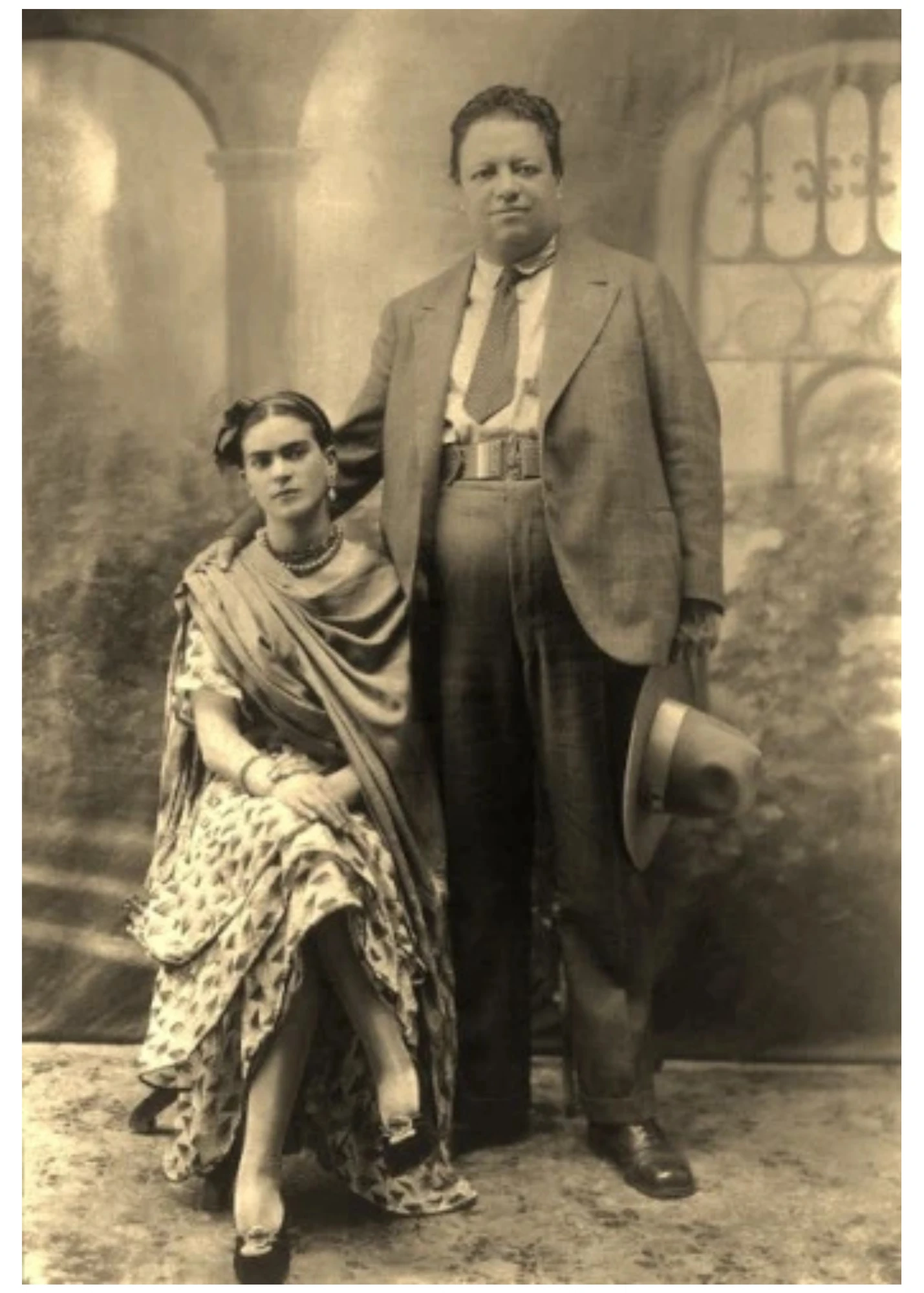
Few couples in art history have been as controversial, scandalous, and unconventional as Frida Kahlo and Diego Rivera. Over the course of twenty-five years, they were bound by cycles of marriage and divorce, passion and estrangement, devotion and betrayal. Their relationship was marked by constant unions and disunions, as well as profound emotional suffering. Frida herself famously reflected on this pain when she wrote, “I have had two serious accidents in my life; the first was when a tram ran over me, and the other was Diego.”
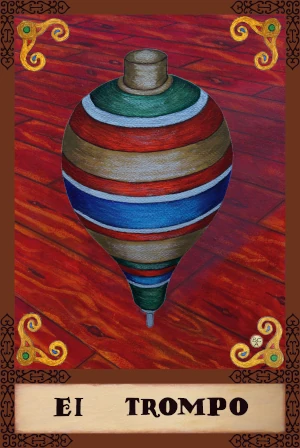

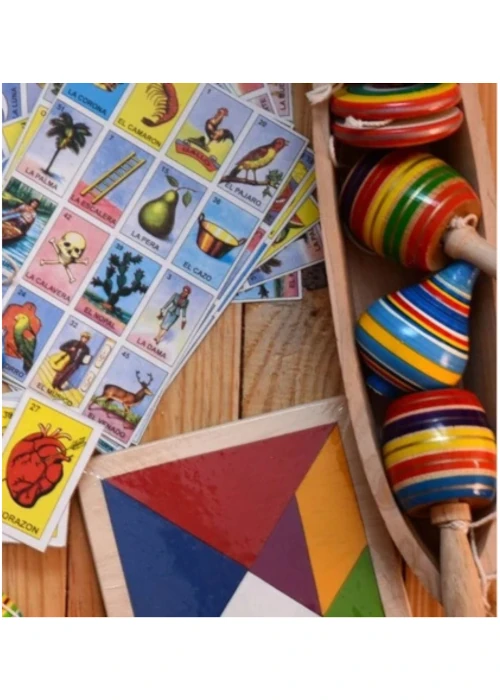
In almost any bazaar in Mexico, one can find a wide variety of traditional handmade toys, including baleros, matracas, yo-yos, loterías, and, of course, trompos. Although trompos—spinning tops—are strongly associated with Mexican popular culture, they are not unique to Mexico. Their history dates back to the earliest days of humankind.
As early societies formed, people not only learned to live together but also to play together, spinning objects for amusement. Archaeological evidence suggests that the earliest spinning tops date back to approximately 4000 B.C. In Mexico, trompos are traditionally crafted from guava or mesquite wood and are easily recognized by their vibrant horizontal stripes.
Each year, the Popular Toy Contest is held at the Museum of Mexican Popular Toys in the city of San Miguel de Allende. This competition not only recognizes outstanding handmade creations but also encourages the continued use of artisanal toys over mass-produced plastic alternatives, helping to preserve an important aspect of Mexico’s cultural heritage.
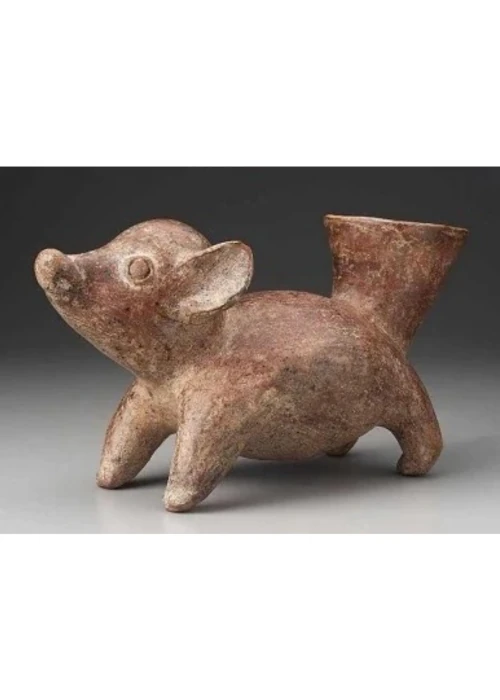
Possibly one of the most famous and endearing dog breeds in the world is the Chihuahua. Known for its alert and protective nature, as well as its large, expressive eyes, this small canine is native to Mexico and is considered one of the oldest dog breeds in existence.
While several theories surround its origins, the most widely accepted suggests that the Chihuahua is a descendant of the techichi, the companion dog of the Toltecs. Evidence supporting this theory includes engravings and sculptural representations of similar dogs found in Toltec, Maya, and Aztec archaeological sites. Regardless of its precise lineage, the breed’s deep roots in Mesoamerican culture are undeniable.
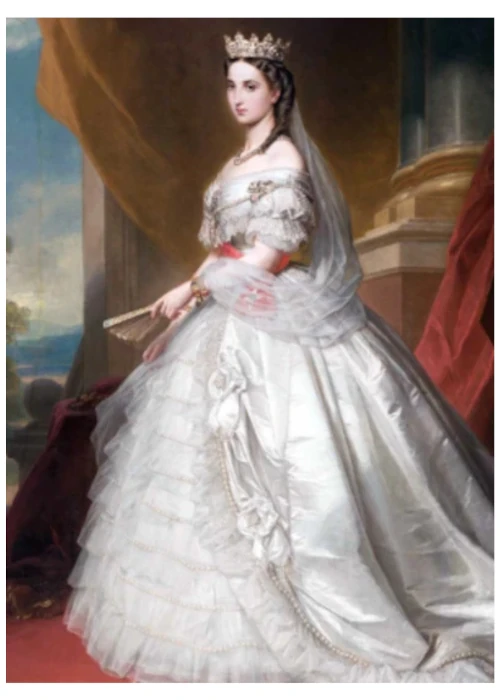
Chihuahuas gained widespread popularity in the 19th century, when American visitors to the northern border state of Chihuahua began acquiring the dogs and naming them after the region. Around the same time, the breed achieved international recognition after being introduced to Europe by Empress Carlota, the wife of Maximilian of Habsburg, Emperor of Mexico during the French intervention (1861-1867). Carlota of Mexico developed a particular fondness for these small dogs and kept them as companions at court, helping to elevate the Chihuahua’s image as an elegant and exotic breed among European aristocracy. From that point on, the Chihuahua became a global cultural symbol of Mexico.
.
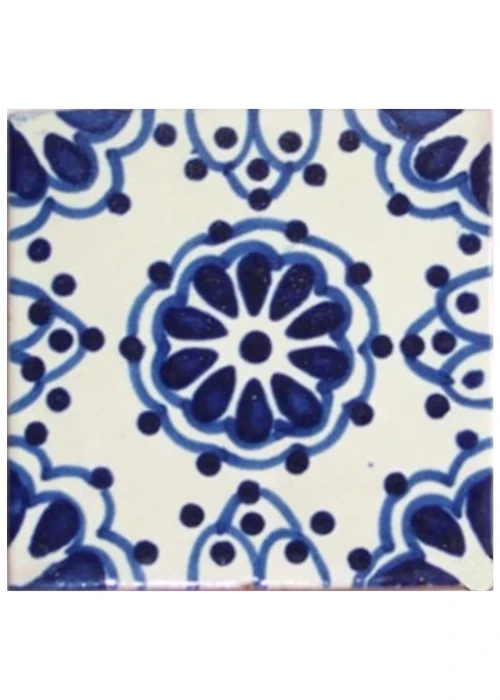
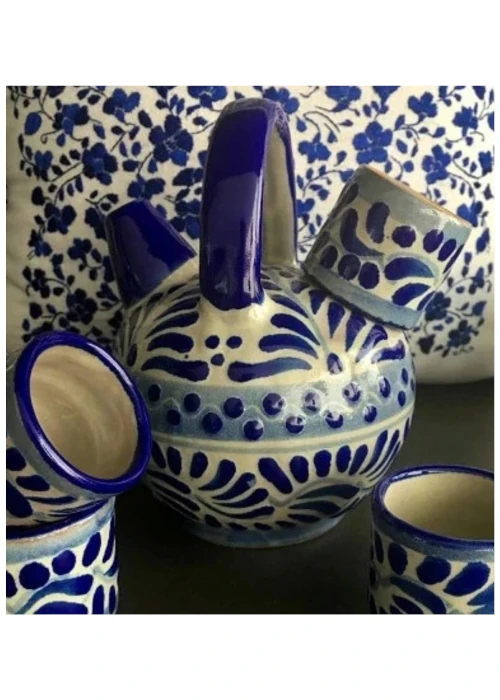
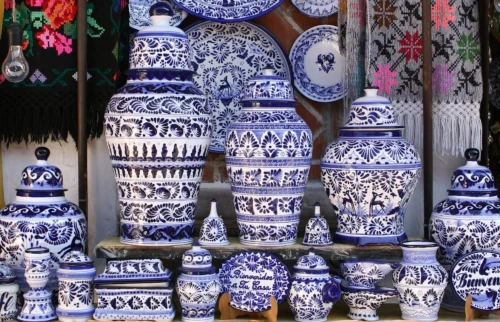
One of Mexico’s richest and most renowned artisanal traditions is undoubtedly Talavera, originating in the state of Puebla. Talavera is distinguished by its intricate patterns and its characteristic use of metallic cobalt blue set against a soft, milky-white glaze.
The term Talavera refers not only to a decorative style but to a complex ceramic process shaped by diverse artistic traditions from different regions of the world. The technique of glazed ceramics, fundamental to Talavera, originated in imperial China and was later adopted by Islamic artisans, who introduced it to the Iberian Peninsula in the 15th century. The name itself derives from the town of Talavera de la Reina, in Toledo, Spain, a historic center of ceramic production.
During the Spanish Colonization of Mexico, master potters from the Iberian town of Talavera de la Reina settled in Puebla, attracted by the region’s abundance of high-quality clay and other essential materials. These artisans transmitted their techniques to local Indigenous craftsmen, resulting in a unique fusion of European and Indigenous knowledge. As a result, Puebla emerged as the most important center of ceramic production in colonial Mexico, establishing Talavera as one of the country’s most enduring and iconic artistic expressions.
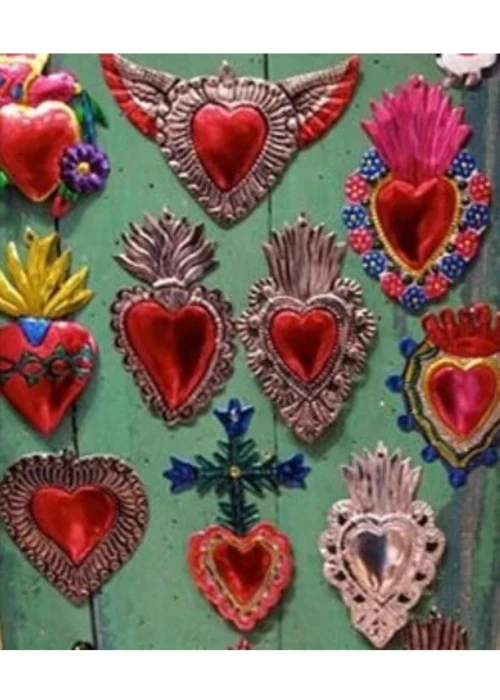
One of the oldest symbols of Catholic devotion among the Mexican people is the brass heart, commonly known as milagritos, or “little miracles.” These small metal votive offerings typically represent the Sacred Heart and are often adorned with symbolic elements such as crowns, daggers, thorns, or flames.
Milagritos are traditionally crafted from thin tin or brass plates, carefully struck with a chisel to create relief, and then painted or sometimes covered with gold leaf. The term milagrito derives from their devotional purpose: they are offered in prayer to request a miracle, as well as in gratitude once a prayer has been answered and the miracle granted.
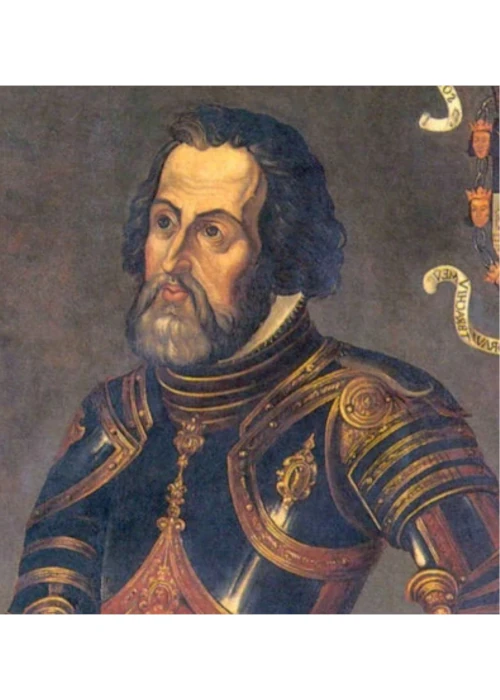
The use of milagritos in Mexico dates back to the time of the Spanish conquest, when such offerings were often made from gold or embellished with precious stones. Historical records even recount that Hernán Cortés, the Spanish conquistador of Mexico, offered a milagrito to the Virgin Mary in thanksgiving for surviving a scorpion sting. Today, milagritos continue to serve as powerful expressions of faith, hope, and gratitude within Mexican popular religious culture.
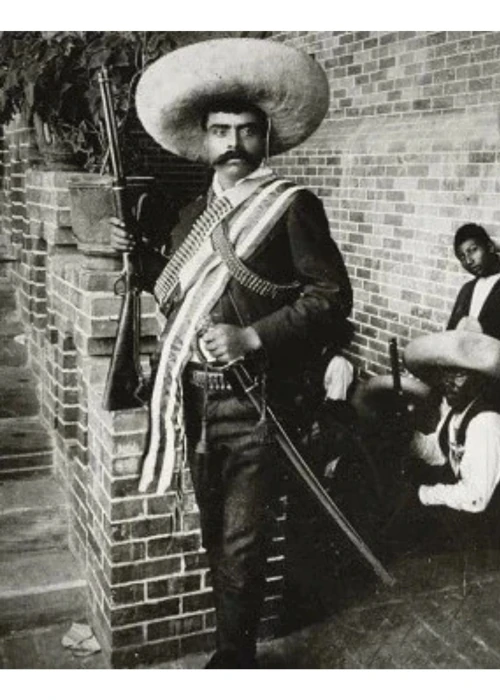
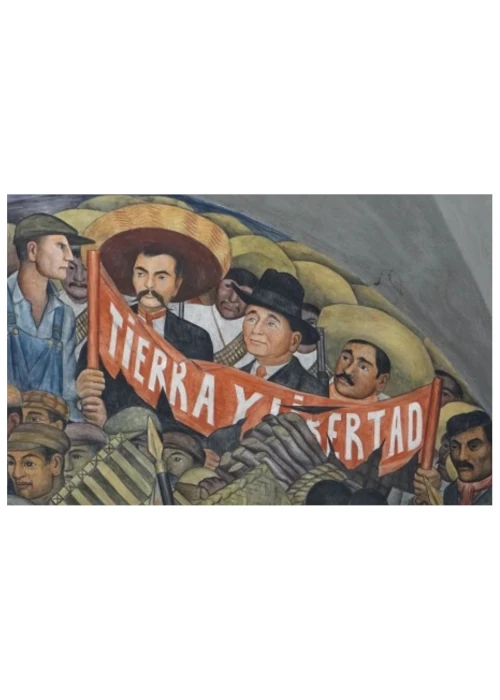
Emiliano Zapata, also known as El Caudillo del Sur (“The Southern Commander”), was one of the most important military and political figures of the Mexican Revolution (1910–1917). Instantly recognizable by his charro suit, wide-brimmed straw sombrero, and thick moustache, Zapata embodied both the image and the ideals of revolutionary Mexico. A man of unwavering convictions, he is today regarded as a national hero.
Zapata witnessed firsthand the deep social inequalities and rural poverty produced by the economic policies of President Porfirio Díaz, which were marked by the exploitation of peasant and Indigenous labor for agricultural expansion. In response, Zapata dedicated his life to defending the rights of Indigenous communities and rural farmers to the lands they had historically worked and inhabited.
Central to his struggle was the Plan de Ayala, a revolutionary manifesto outlining a radical program of agrarian reform. Its essence is captured in a phrase that has endured in Mexican political thought: “La tierra es de quien la trabaja”—“The land belongs to those who work it.” More than a century later, these words remain a powerful symbol within leftist and social justice movements in Mexico.
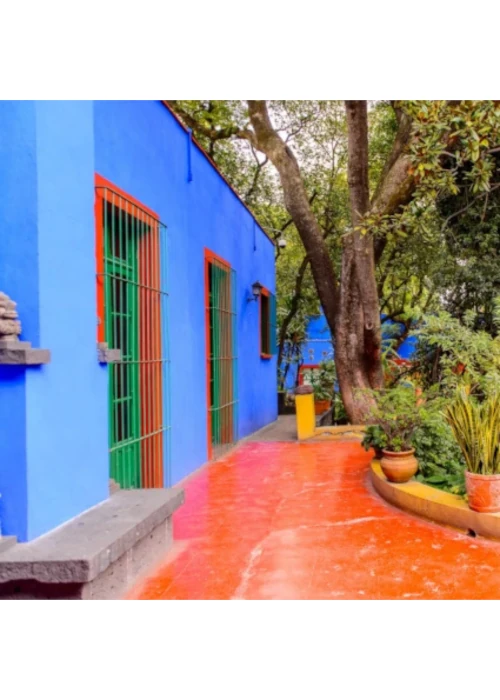
One of the most important cultural landmarks in Mexico City is undoubtedly La Casa Azul, or the Blue House, located in the iconic neighborhood of Coyoacán. More than half a century ago, this house was the home of the legendary Mexican painter Frida Kahlo and her husband, the equally renowned artist Diego Rivera.
The cobalt-blue exterior walls—responsible for the house’s iconic name—have remained unchanged since its construction in 1904. Over the years, the house welcomed notable guests such as sculptor Henry Moore and soviet politician-revolutionary Leon Trotsky. Within its walls, the museum preserves works by both Kahlo and Rivera.
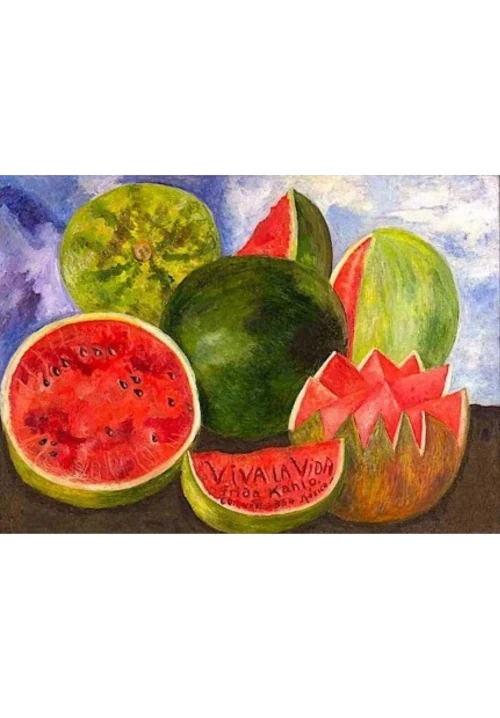
Walking through its rooms or wandering its lush gardens, one can immediately sense the profound passion that Frida and Diego shared for Mexican culture, history, and identity. Among the most significant works associated with La Casa Azul is Frida Kahlo’s final painting: a still life of watermelons set against a blue background, titled Viva la Vida. It is said that just eight days before her death, Frida inscribed the phrase “Viva la Vida, Coyoacán 1954 México” onto one of the watermelons. What makes this point especially powerful is that Frida wrote these words despite a lifetime marked by physical suffering. After a devastating tram accident in her youth, she endured more than twenty surgeries and lived with chronic pain until the end of her life. In this context, Viva la Vida emerges not merely as a title, but as a defiant and affirmation—a final declaration of love for life in the face of profound adversity.
Mexico: Convergence of Civilizations
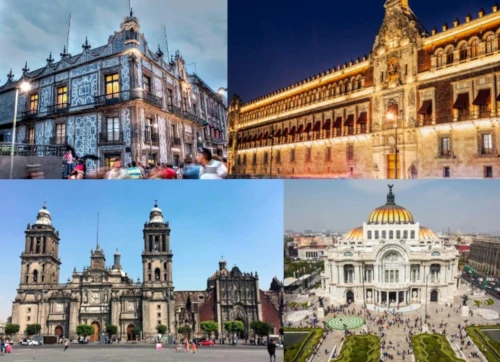
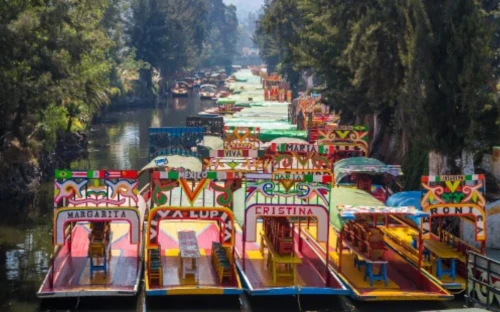
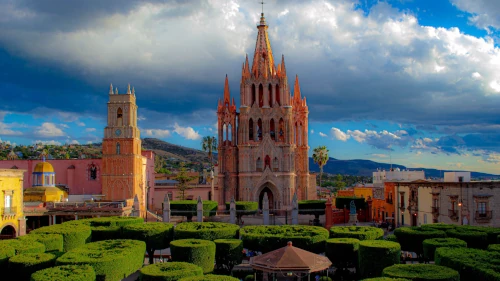
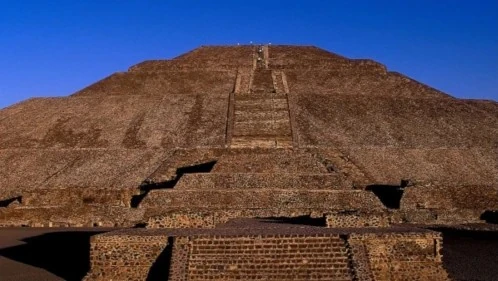
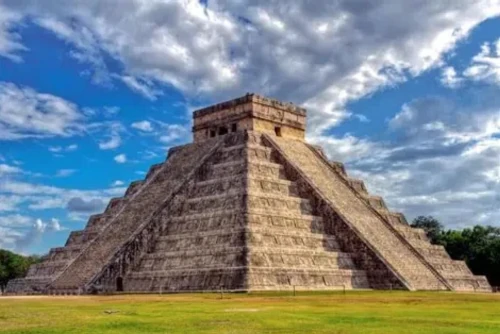
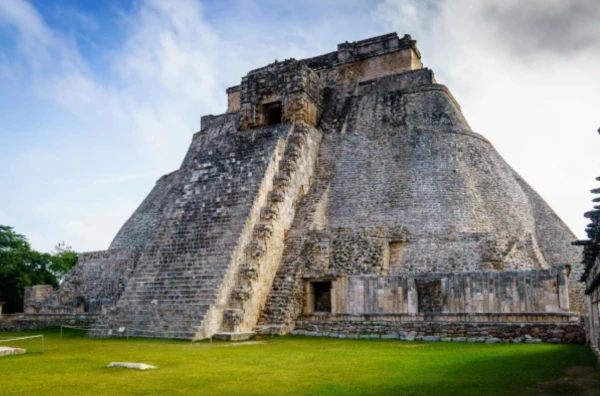
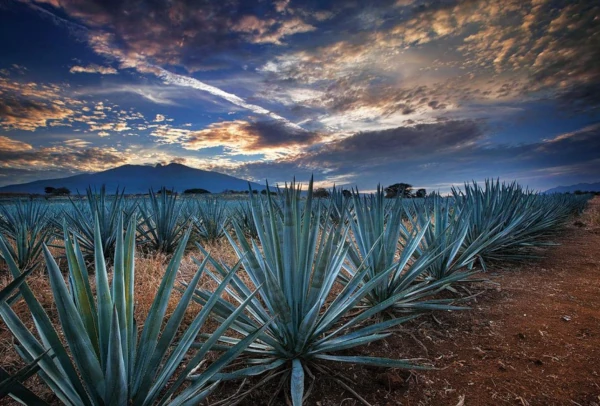
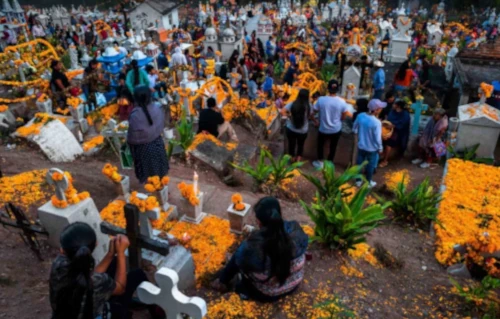

Did you know that Mexico is one of the most diverse countries in the world, with a remarkably rich historical, cultural, and environmental heritage? One of the principal missions of the United Nations Educational, Scientific and Cultural Organization (UNESCO) is to identify and protect cultural and natural assets—both tangible and intangible—that are considered part of humanity’s shared heritage for their outstanding historical and cultural significance. According to UNESCO, Mexico has 35 inscriptions on the World Heritage List, ranking sixth worldwide—after Italy, China, Germany, France, and Spain.
Mexico’s extraordinary cultural richness stems from the convergence of the rich civilizations of Mesoamerica—including the Aztec and Maya—and Iberian traditions following the Spanish conquest, creating one of the world’s most diverse cultures.
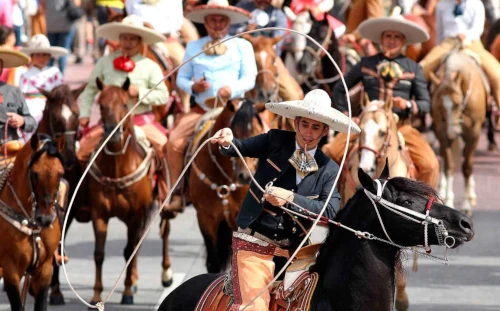
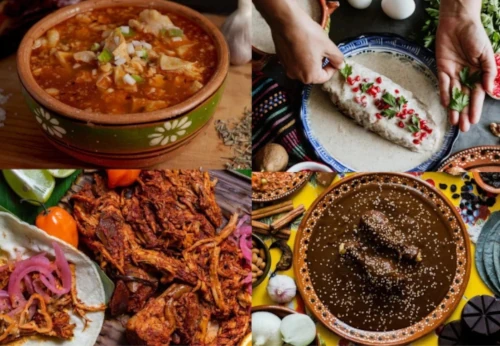
Tangible heritage—meaning sites and landmarks that can be seen and touched—includes the Historic Center of Mexico City, Xochimilco, San Miguel de Allende, the pre-Hispanic cities of Teotihuacan, Chichén Itzá, and Uxmal, as well as the Agave Landscape and Ancient Industrial Facilities of Tequila, among many others. In the realm of intangible heritage—traditions, practices, and cultural expressions recognized for their social and historical significance—UNESCO has acknowledged celebrations such as Día de Muertos, Mariachi music, Talavera pottery, the ritual of the Voladores de Papantla, the traditions of Charrería, and last but by no means least important, Mexican cuisine.
Francisco “Paco” Díaz Cuéllar
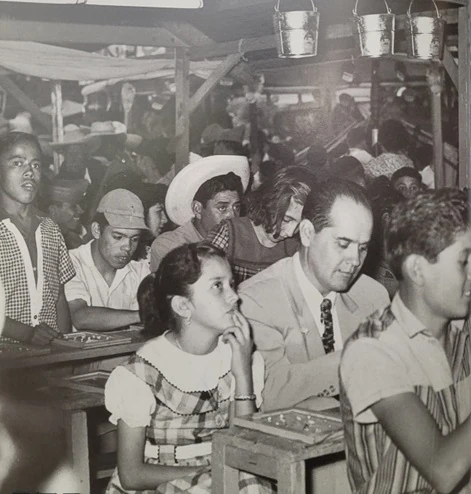
Playing Lotería
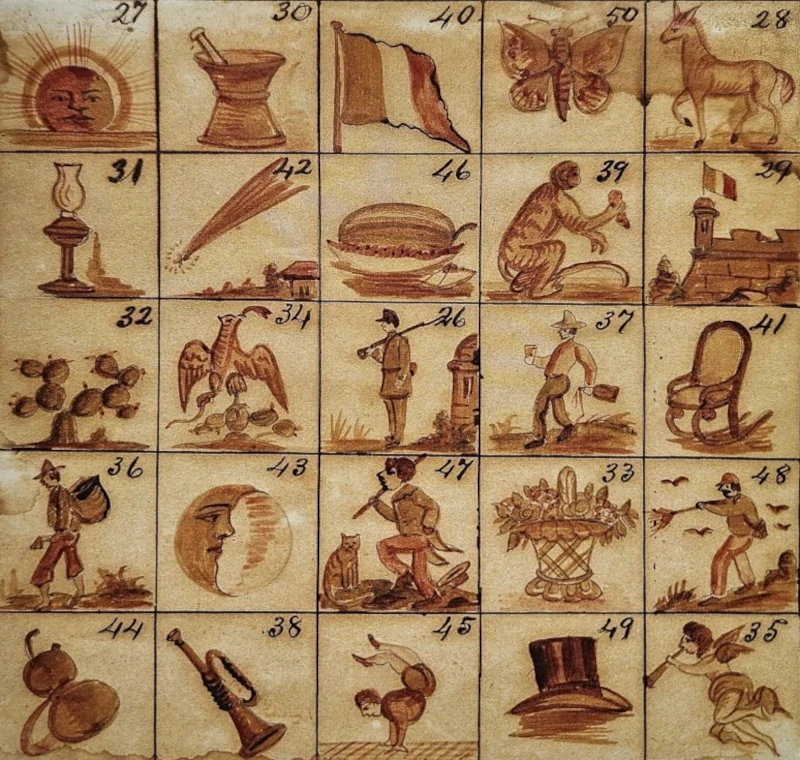
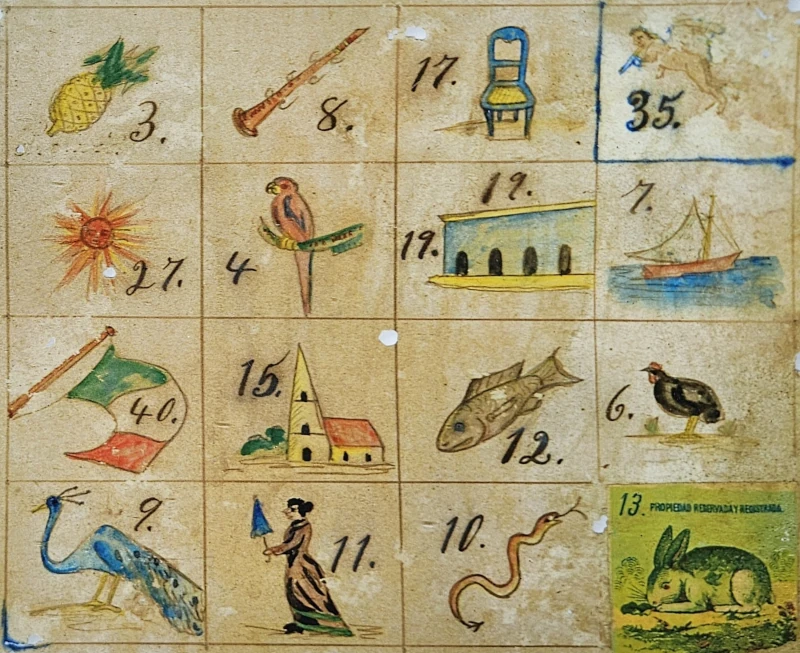
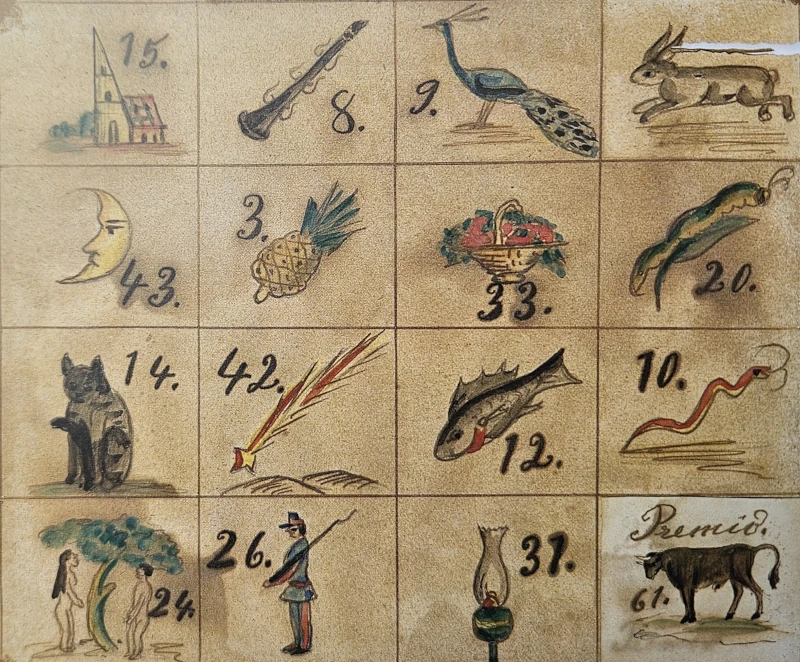
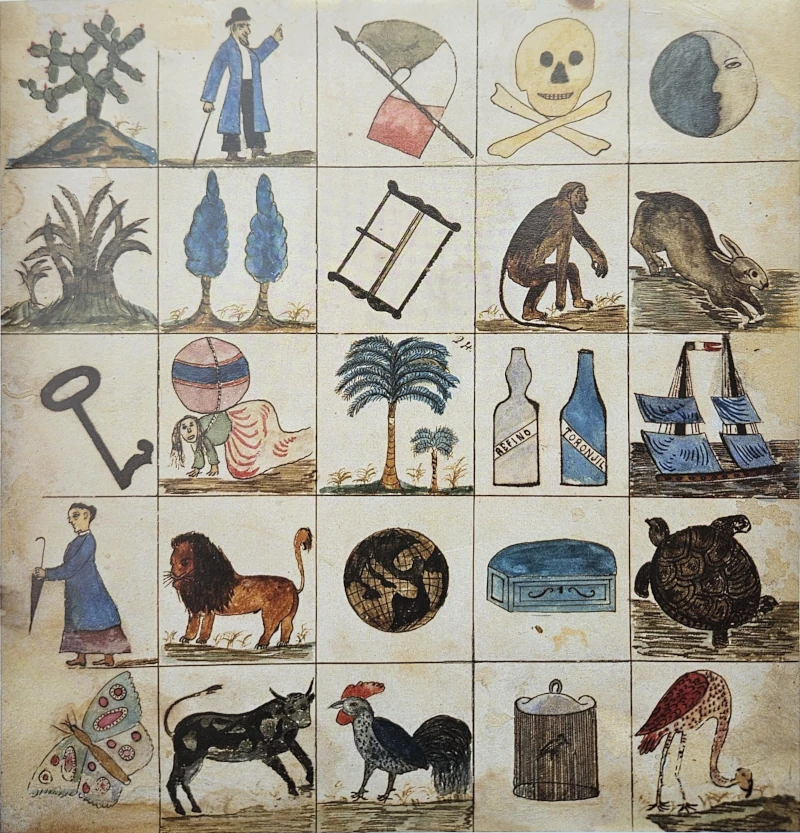
19th Century Lotería Tables – Click on images to enlarge

It is our mission at Color Magenta, not only to make products
we are proud to sell, but also to deliver a message.
Click on the icons below to learn more about:




Tik-Tok