
Home

Your Account

Shopping Cart

Contact


Between Popocatépetl and Texcoco
The Valley of Mexico, where Mexico City stands today, was formed over millions of years of volcanic activity from Popocatépetl. These geological forces shaped a vast, enclosed landscape surrounded by mountains such as Iztaccíhuatl, Ajusco, and the Sierra Nevada, and containing a series of interconnected lakes and wetlands, including Lake Texcoco, Lake Xochimilco, and Lake Chalco. This unique aquatic environment set the stage for one of the most remarkable civilizations in the ancient Americas.
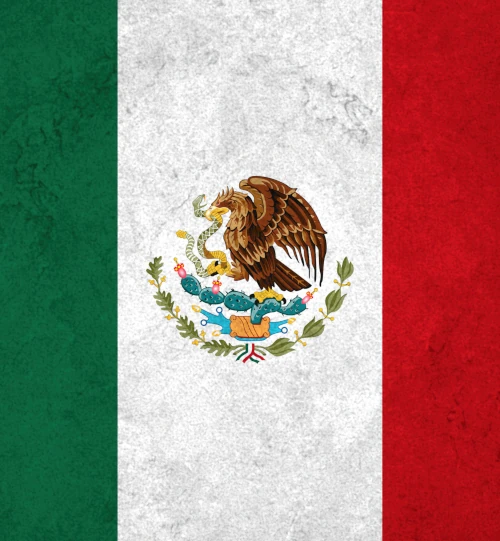
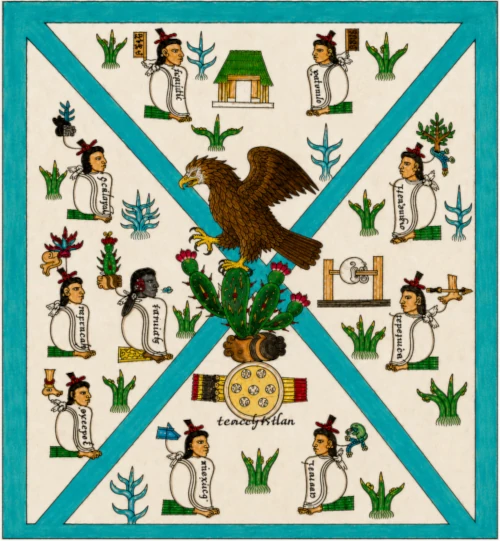
According to Aztec mythology, their patron god Huitzilopochtli instructed them to leave their ancestral homeland and search for a mystical sign: an eagle perched upon a cactus, devouring a serpent, where they would establish their capital. After years of migration, they encountered the prophesied sign on an island in Lake Texcoco in 1325 and founded Tenochtitlan. The powerful image of the eagle and serpent would eventually become the central symbol of the Mexican national flag. By the early 16th century, Tenochtitlan had grown into a vast city of roughly 200,000 inhabitants, built around an intricate network of canals, causeways, and bridges—a remarkable urban center that rivaled the largest European cities of the time.
In this setting, we chose to represent the landscape where the Aztecs founded their capital with an axolotl sculpture, an amphibian native to the region’s wetlands. We affectionately named this figure Atlalli, a constructed artistic name inspired by Nahuatl, the language spoken by the Aztecs, combining ātl, meaning “water,” and tlalli, meaning “earth.” Atlalli’s two tonalities, pink and turquoise, evoke this geological duality: the volcanic forces of Popocatépetl and the waters of Lake Texcoco.
The Aztecs were polytheistic, meaning they believed in many deities. They understood the world as governed by different yet interconnected forces of nature and existence, not a single divine power. In Aztec cosmology, the earth was not simply the ground beneath their feet; it was alive, powerful, and fertile—a force that received death while continually giving rise to new life. Mountains rose from it, while volcanoes could both destroy the landscape and, through their eruptions, create new land.
The matte pink version of Atlalli reflects the albino pink coloration found in axolotls while also evoking Tlaltecuhtli, the Aztec earth goddess. Discovered in 2006, the monumental 14-by-12-foot, 12-ton monolith is one of the most significant works recovered from ancient Tenochtitlan. Carved from pink andesite, this colossal sculpture creates a powerful connection between the pink version of Atlalli, the earth, and the volcanic forces of Popocatépetl.
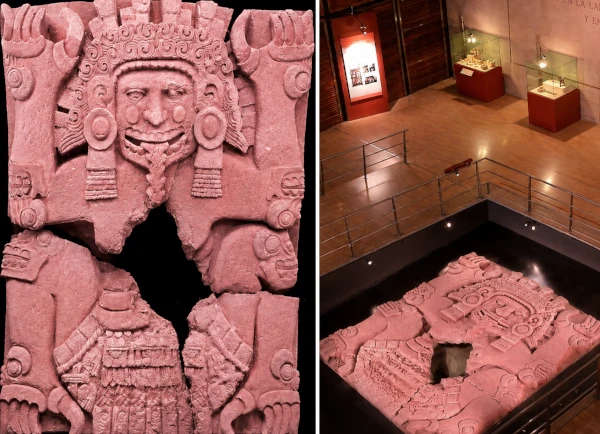
Tlaltecuhtli
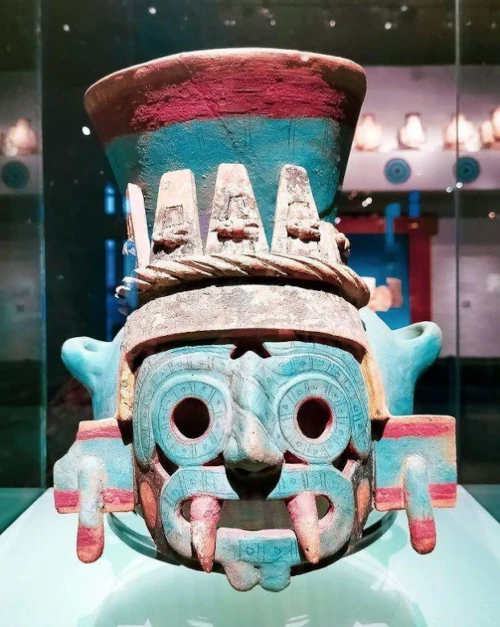
Tlaloc
Tlaloc was the Aztec god associated with water, rain, and fertility. The Aztecs believed that water was not simply a resource; it was living, powerful, and sacred. Rain descended from the mountains, springs emerged from the earth, and lakes sustained life. Water brought abundance and fertility, but it could also unleash destructive storms and floods.
The polished turquoise version of Atlalli is an artistic interpretation of green axolotls, while also evoking the lakes, springs, and canals that once sustained Tenochtitlan. Turquoise Atlalli also draws inspiration from the Tlaloc ritual vessel (Olla Tláloc). Just as the monumental pink andesite monolith of Tlaltecuhtli connects pink Atlalli to the earth, this representation creates a powerful connection between the turquoise version of Atlalli, water, Tlaloc, and Lake Texcoco.
Atlalli’s two contrasting finishes represent a duality: turquoise is glossy, reflective, and fluid, evoking water, while pink is matte, terrestrial, and volcanic, embodying the earth. Together, they represent the forces that shaped the Valley of Mexico—Popocatépetl and Lake Texcoco—from which Tenochtitlan, the capital of the Aztec Empire, flourished. Finally, the obsidian eyes become the point of convergence between these two earthly forces.
“Earth and water, a city that did not displace nature but embraced it.”
— Gonzalo Celorio, 2025 Miguel de Cervantes Prize for Literature in the Spanish Language.
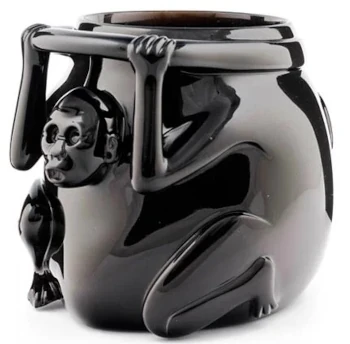
Aztec Obsidian Vessel
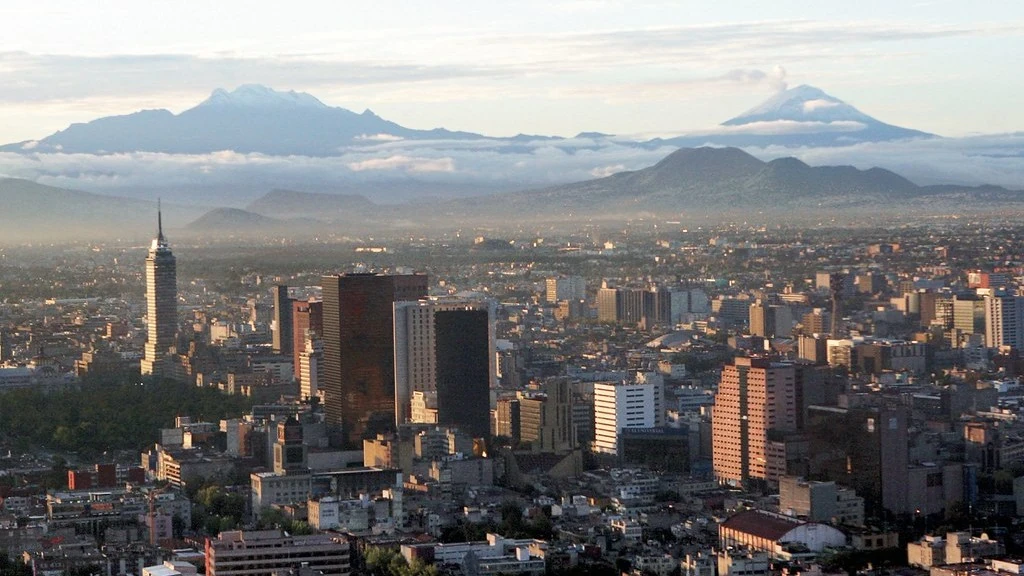
Tenochtitlan / The Valley of Mexico / Mexico City – Popocatépetl & Iztaccíhuatl.
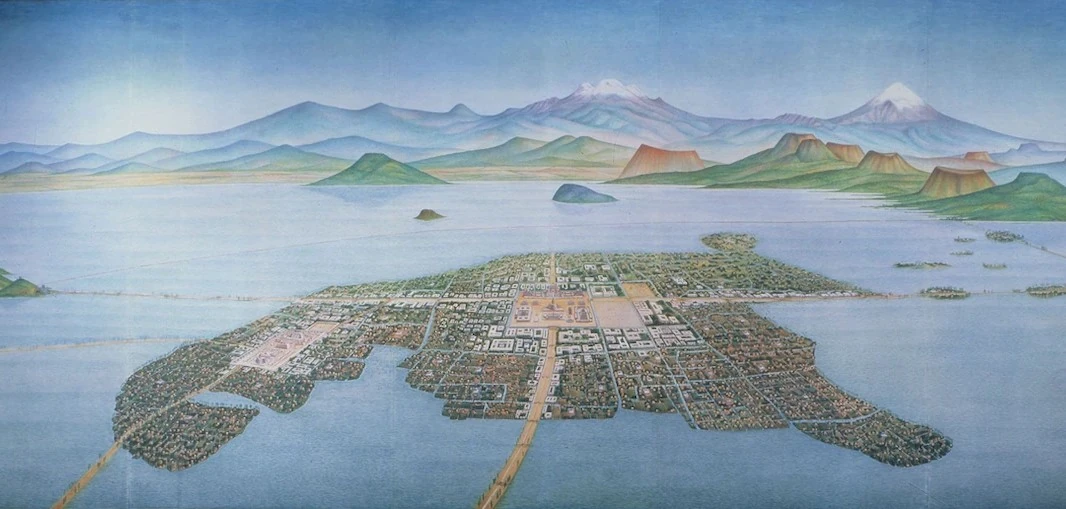
Luis Covarrubias
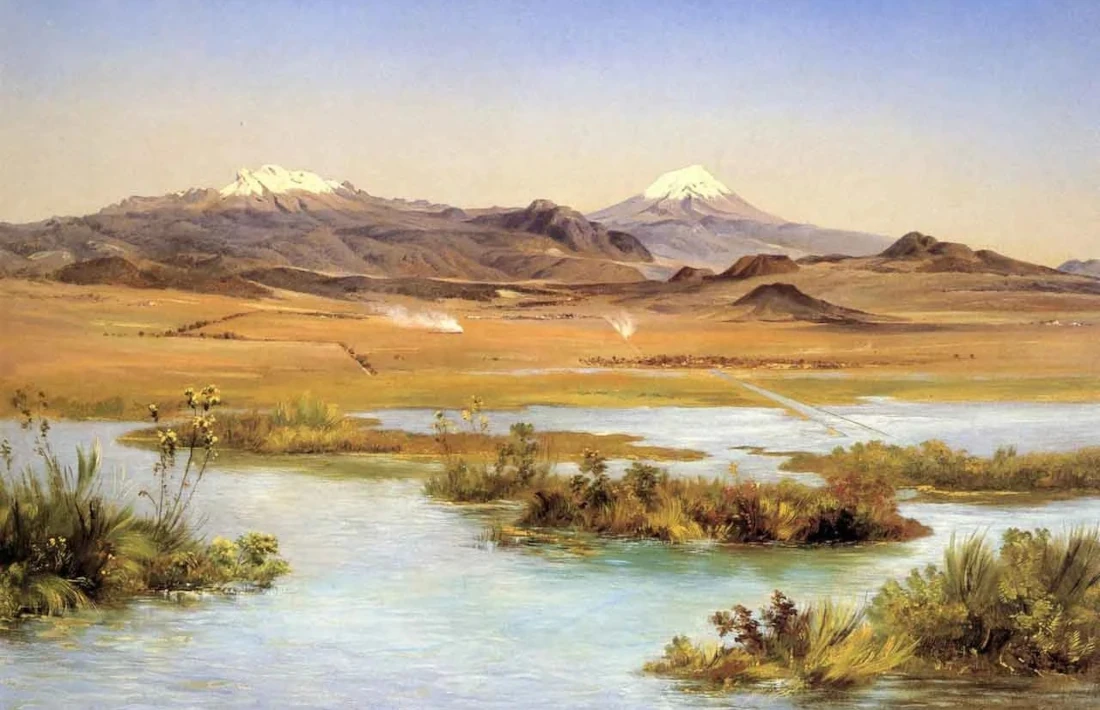
José María Velasco
(Click on images to enlarge)
The Axolotl: Where History, Ecology, and Modern Medicine Meet
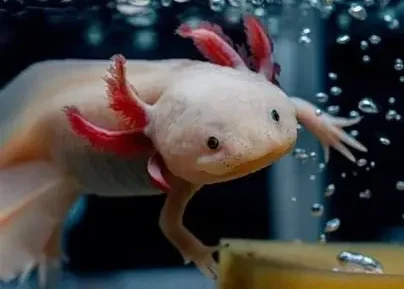
For centuries, the axolotl has inhabited the lakes of the Valley of Mexico, waters that once sustained Tenochtitlan, the capital of the Aztec Empire. The word comes from the Nahuatl āxōlōtl, generally understood as a water creature, and the axolotl is deeply connected to Xólotl, the Aztec deity of lightning and transformation. This remarkable species has since evolved from Aztec mythology and a dweller of the ancient waters to a highlight of modern scientific research.
Beyond its rich history and cultural significance, the axolotl has fascinated scientists for its extraordinary biology. Its regenerative capabilities are unparalleled among vertebrates. For example, if an axolotl loses a limb or tail, it can grow another that is virtually indistinguishable from the original. It can even repair portions of its spinal cord, heart, and brain. In other words, what would be a life-altering injury for almost any other living creature is merely a temporary setback for the axolotl.
Equally remarkable is the fact that the axolotl never undergoes the complete metamorphosis typical of most amphibians. In simple terms, it never fully grows up. Unlike frogs that transform from tadpole to mature form, the axolotl reaches adulthood while retaining juvenile characteristics, a phenomenon known as neoteny. This remarkable creature remains aquatic throughout its life, preserving its beautiful, feathery external gills—its most recognizable characteristic. Unlike the protected gills of fish, the axolotl’s gills are completely exposed. Its delicate filaments create a large surface area, making them highly efficient at absorbing oxygen. Yet this remarkable adaptation is also the axolotl’s greatest vulnerability, leaving its sensitive gills directly exposed to polluted water.
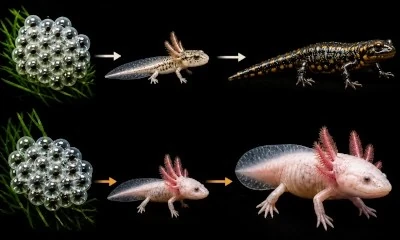
Neoteny

Air Pollution in Mexico City
Mexico City is one of the world’s largest and fastest-growing metropolitan areas, home to more than 20 million people and facing some of the most serious environmental challenges of any major city. As the city continues its seemingly endless growth, declining water quality—caused by waste, fertilizers, pesticides, and industrial contaminants—has placed increasing pressure on the remaining aquatic ecosystems. Mexico City’s geographical setting further worsens water degradation. Surrounded by mountains, the Valley of Mexico forms a natural basin that can trap polluted air and smog over the metropolitan area. As rain falls through this polluted atmosphere, it carries airborne contaminants into the soil and waterways. Despite centuries of urban expansion, much of the ancient lake system disappeared beneath roads and buildings. However, Lake Xochimilco, on the city’s southern outskirts, still preserves remnants of the aquatic landscape that once covered the Valley of Mexico and remains the axolotl’s last surviving natural habitat.
It is worth briefly mentioning that Xochimilco is far more than the last natural home of the axolotl; it is also the living remnant of the ancient lake system that sustained Tenoichtitlan. Recognized by UNESCO for preserving its pre-hispanic lake heritage, Xochimilco is one of Mexico City’s most popular destinations, drawing visitors to its colorful trajineras, and festive atmosphere.
Although Xochimilco prevails, the number of wild axolotls living in its waters has declined alarmingly, from several thousand just a decade ago to fewer than one hundred today. Nevertheless, we cannot simply breed more axolotls and release them back into polluted waters. If the species is to survive in the wild, we must first restore its habitat. In other words, to save the axolotl, we must first revive Xochimilco’s waters.
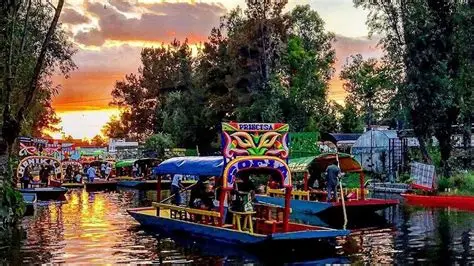
Xochimilco
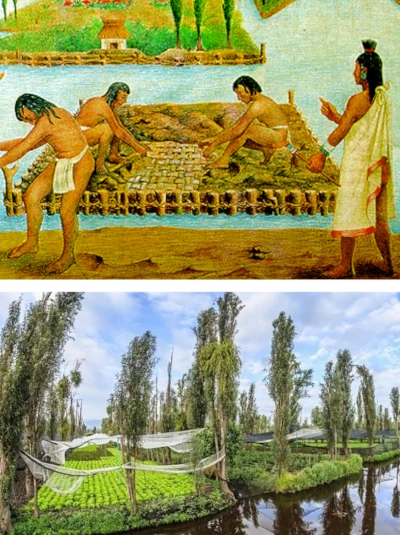
Aztec Chinanpas & Chinanpa Refugios
Apart from polluted habitat, two other factors are contributing to the decline of the axolotl population. The first is the growing demand for water as Mexico City expands, reducing the lakes, canals, and wetlands that form the axolotl’s natural habitat. Today, only 10% of the lakes and wetlands that once covered the Valley of Mexico remain. The second factor is the introduction of invasive species, particularly tilapia, which prey on young axolotls.
Dr. Luis Zambrano of the National Autonomous University of Mexico (UNAM) is a leading figure in axolotl conservation and the restoration of Xochimilco’s habitat. His team rehabilitates polluted canals and revives the chinampa system, an ancient Aztec form of raised-field agriculture in which fertile plots were built above the water using sediment and organic matter. Dr. Zambrano’s Chinampas Refugio (refugees or shelters) creates safer axolotl habitats through natural biofilters that improve water quality and barriers that keep invasive tilapia out.
Through UNAM, Zambrano has created the Adopt an Axolotl initiative, which allows people to support axolotl conservation through contributions that help fund habitat restoration, research, and protection efforts, while donors receive information and recognition connected to the axolotl they are supporting.
Just as importantly, protecting Xochimilco helps fight climate change by storing carbon, cooling the city, absorbing rainwater, and recharging aquifers. Its water and vegetation release heat more slowly than concrete and asphalt, helping reduce temperatures. Consequently, protecting the axolotl and Xochimilco means protecting not only Mexico City’s cultural heritage but also its water and environment.
A question naturally arises: Why protect axolotls in the wild when so many already exist in laboratories? Because an axolotl in an aquarium cannot replace one living in the natural environment that shaped its biology. Captive populations often descend from relatively few ancestors, reducing genetic diversity and potentially weakening traits essential for survival. These unique characteristics include the axolotl’s extraordinary ability to regenerate, which is invaluable to science and regenerative medicine. Evolution has spent millions of years refining biological solutions that scientists are only beginning to understand. If the axolotl disappears from the wild, genetic adaptations shaped by its natural environment could be lost forever.
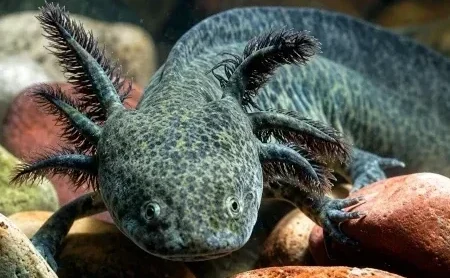
“All efforts to conserve the axolotl are completely useless if we don’t preserve what little remains of the area where it lives. What’s the point of saving a species from extinction if it doesn’t have a natural habitat to live in? If Xochimilco disappears, Ambystoma mexicanum (the axolotl) is doomed to never leave the glass tanks of zoos and aquariums. And honestly, at least in biological terms, that’s not really living.”
— Andrés Cota Hiriart, The Axolotl: Biology of the World’s Most Outstanding Amphibian, P. 49, Elefanta Editorial, 2026.
A Symbol on the Brink, Turning Awareness into Action
The axolotl has become a cultural phenomenon, extending far beyond Mexico and the exotic pet world. Its instantly recognizable smile and distinctive external gills have made it a familiar presence across social media, clothing, toys, artwork, video games, and cartoons. Its endearing appearance and almost human-like traits have given this remarkable animal extraordinary universal appeal. Once a little-known aquatic salamander native to the waters of Xochimilco, the axolotl has become one of the world’s most beloved amphibians. Its cultural significance is especially evident in Mexico City, where no other animal—or symbol, for that matter—captures the city’s identity as completely as the axolotl.
In recent years, the image of the axolotl has become increasingly popular throughout the mexican capital. Its presence has spread from murals and graffiti to more official symbols of recognition, appearing on public transportation and even the nation’s banknotes. A striking contradiction remains: the axolotl has never been more visible across the urban landscape, while its biological existence in the waters of Xochimilco has never been more fragile. The challenge now is to transform this extraordinary popularity into a force for its survival.
Any artistic representation should invite the viewer not simply to admire it, but ultimately to understand what it represents. In the case of the axolotl in general, and of Atlalli in particular, its popularity should inspire greater awareness, meaningful dialogue, and, ultimately, action toward its conservation.

Bertha Cuéllar

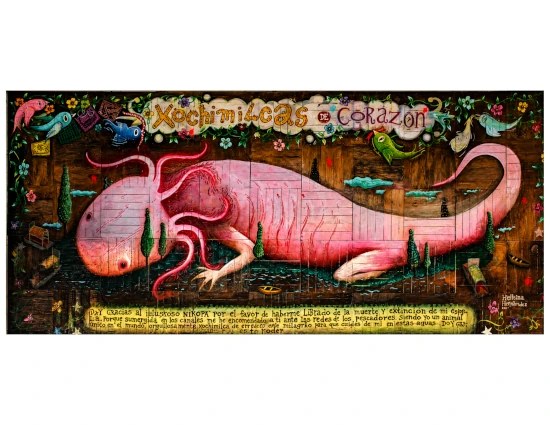
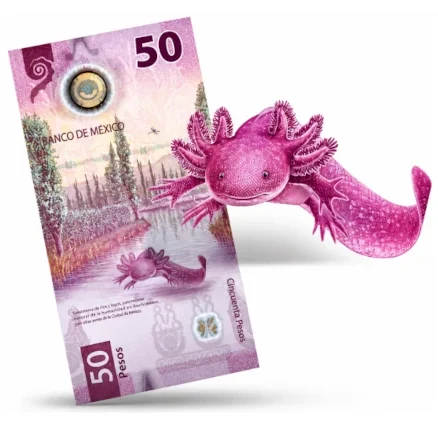
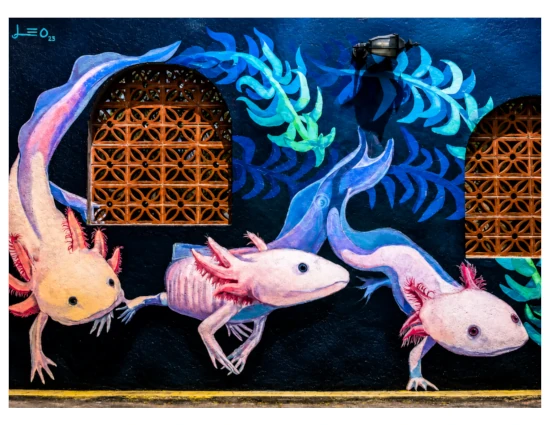
(Click to enlarge)

Virgen Conquistadora, Click to enlarge.
Click to learn more about the author
Bertha Cuéllar Aguilar is a Mexican artist whose work is deeply inspired by Spanish colonial art, sacred iconography, and the rich traditions of Mexican folklore. Drawing from Mexico’s extraordinary artistic heritage in painting and sculpture, she revives traditional techniques to preserve craftsmanship and artistic practices that have gradually faded over the centuries. Among her most distinguished creations are her hand-carved cedarwood sculptures.
Her work has been exhibited in museums and galleries throughout Mexico, the United States, the United Kingdom, and France, including a special invitation to exhibit at the Hermès flagship boutique on Rue du Faubourg Saint-Honoré in Paris

It is our mission at Color Magenta, not only to make products
we are proud to sell, but also to deliver a message.
Click on the icons below to learn more about:





Tik-Tok