
Home

Your Account

Shopping Cart

Contact


Between Earth and Water, Pink and Turquoise: The Mystical Home of Atlalli
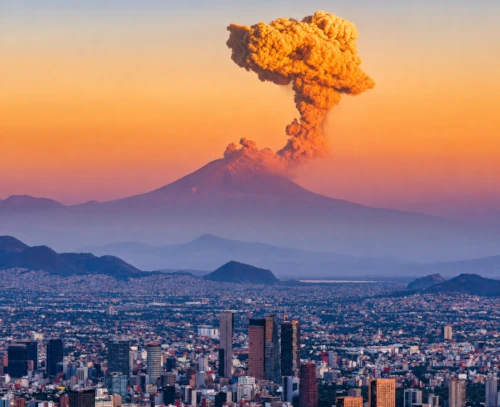
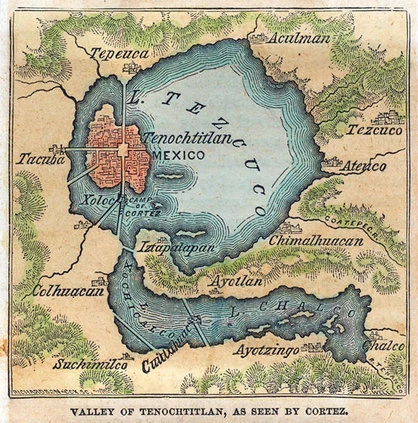
The Valley of Mexico, where the Aztecs established their capital in the 14th century and where modern-day Mexico City stands, was shaped by volcanic activity, lava flows, and geological transformation; its landscape was dominated by the great volcano Popocatépetl. Long before the arrival of the Aztecs, and over the course of millennia, the Valley became a vast closed basin containing an interconnected aquatic landscape that included Lake Texcoco. From these waters emerged rich ecosystems that would eventually sustain one of the great urban civilizations of the ancient world. Tenochtitlan, the Aztec capital, was therefore born from a remarkable relationship between earth and water.
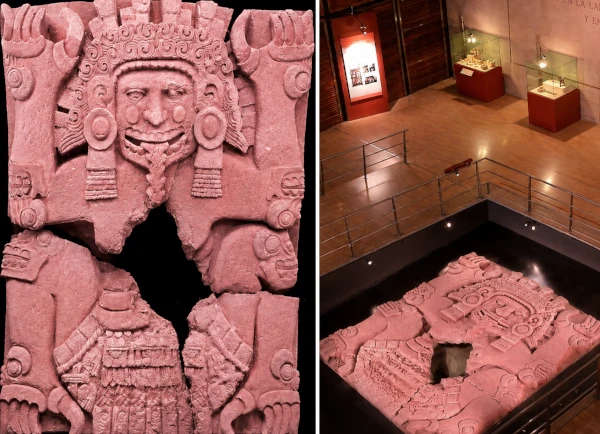
The Aztecs were polytheistic, meaning they believed in many deities. This was basically that they viewed the world as being governed by many different but interconnected forces of nature and existence, rather than a single divine power. Tlaltecuhtli was the goddess associated with the body of the earth itself. In Aztec cosmology, the earth was not simply the ground beneath our feet; rather, it was something alive, powerful, and fertile. The earth received death but also conceived new life. Mountains rose from it, while volcanoes destroyed the landscape but simultaneously created new life.
The matte pink version of Atlalli reflects the natural pink albino tone of the axolotl, while also evoking Tlaltecuhtli, the Aztec deity of the earth. Discovered in 2006, her monumental 14-by-12-foot, 12-ton pink andesite sculpture is one of the most important works recovered from ancient Tenochtitlan and today forms part of the collection of the Templo Mayor Museum in Mexico City. Carved from stone born of the volcanic landscape of the Valley of Mexico, this monumental work creates a powerful connection between the pink Atlalli and the volcanic forces embodied by Popocatépetl.
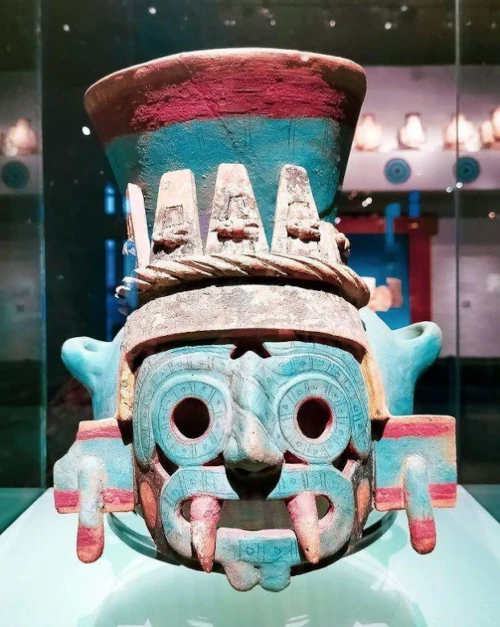
Tlaloc was the divine god associated with water, rain, and fertility. In Aztec cosmology, water was not simply a resource; it was a living, powerful, and sacred force. Rain descended from the mountains, springs emerged from the earth, and lakes sustained life. Water brought abundance and fertility, but could also unleash storms and floods.
The polished turquoise version of Atlalli is an artistic interpretation of the green tones found in real axolotls, while completing the duality of the natural forces that converge in the Valley of Mexico: earth and water. The lakes, springs, and canals that once surrounded Tenochtitlan are evoked through Tlaloc, god of rain and water. The polished turquoise Atlalli becomes a contemporary interpretation of the Tlaloc ritual vessel (Olla Tláloc), measuring approximately 1.15 feet high by 1.02 feet wide and also forming part of the collection of the Templo Mayor Museum. As with the monumental pink andesite Tlaltecuhtli, this remarkable representation of Tlaloc creates a direct connection between the turquoise Atlalli and the waters like Lake Texcoco that once defined the Valley of Mexico.
One less evident detail shared by both versions of Atlalli is their polished black eyes, meant to represent obsidian. Obsidian is born when silica-rich lava cools rapidly, creating its distinctive dark, almost glass-like appearance. The Aztecs used this volcanic material to create knives, blades, and other sharp tools and weapons. Its presence in Atlalli further reinforces the connection between the sculpture, the volcanic landscape, and the materials used by the Aztec.
Atlalli’s contrasting finishes further reinforce this duality: turquoise is glossy, reflective, and fluid, evoking water, while pink is matte, terrestrial, and volcanic, embodying the earth. Together, they represent the cycle of earth and water—Tlaloc and Tlaltecuhtli, Lake Texcoco and Popocatépetl—that sustained life and shaped the environment from which Tenochtitlan, the mystical home of Atlalli, emerged.
A Living Witness: The Axolotl and the Rise of Tenochtitlan
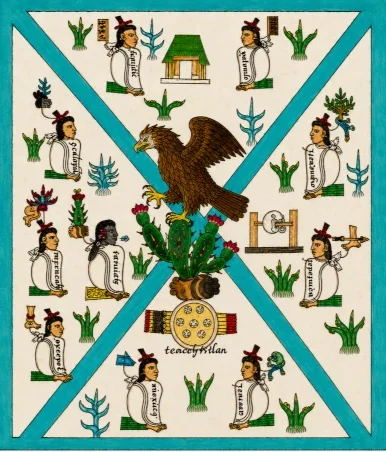
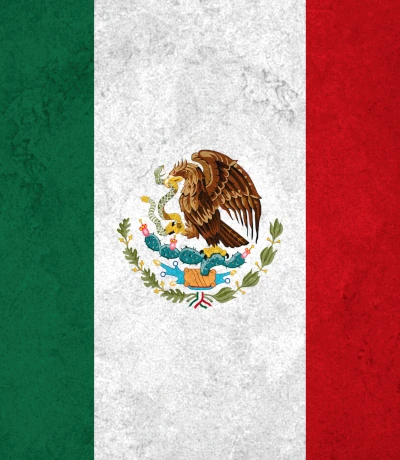
Few animals inspire as much fascination as the axolotl. With its feather-like gills, perpetual smile, and seemingly magical ability to regenerate body parts, this extraordinary amphibian unites science, history, culture, and environmental awareness. A living expression of an extraordinary natural and cultural heritage, the axolotl is a remnant of an ancient lake system, from which one of history’s greatest civilizations emerged.
These interconnected lakes supported an extraordinary variety of aquatic life, including amphibians, plants, and birds, while providing food, transportation, agricultural land, and freshwater resources that helped sustain the Aztecs. It was within this unique environment that the axolotl evolved over thousands of years. The axolotl is therefore not merely an amphibian that happened to inhabit the basin where the Aztecs settled; it is a living remnant of the ancient aquatic landscape from which the Aztec Empire emerged. In short, living in the waters alongside the chinampas, the axolotl was not only an integral part of everyday life in Tenochtitlan, but also a living witness to the rise of the Aztec Empire.
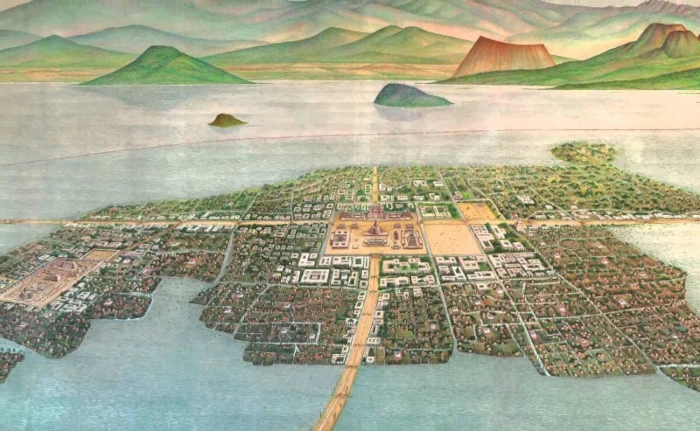
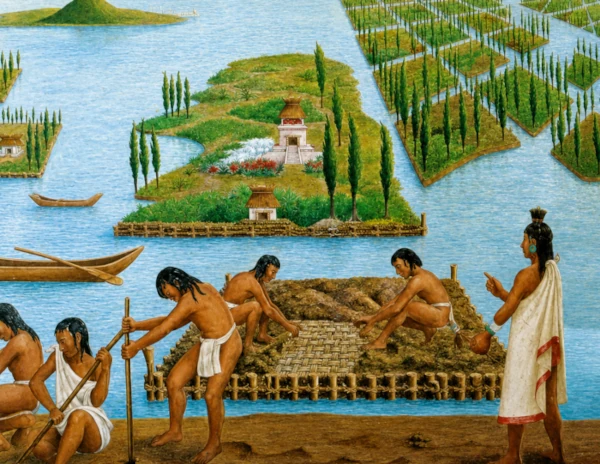
Luis Covarrubias, La Gran Tenochtitlán Museo Nacional de Antropología
The Axolotl: Where History, Ecology, and Modern Medicine Meet
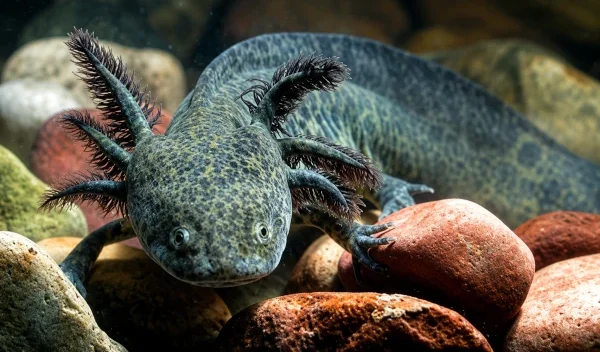
Equally remarkable is the fact that the axolotl never undergoes the complete metamorphosis typical of most amphibians. In common language, it simply never grows up. Unlike frogs, which undergo metamorphosis from aquatic larvae—tadpoles—into adults adapted for life on land, the axolotl reaches adulthood while retaining many of its juvenile characteristics throughout its life, a phenomenon known as neoteny. Rather than losing its external gills and transitioning to a primarily terrestrial existence, as many other salamanders do, the axolotl remains aquatic throughout its life, retaining its beautiful, feathery external gills—its most recognizable aesthetic characteristic.
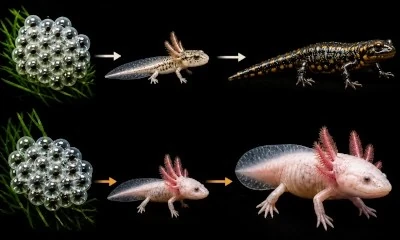
Unlike fish, whose gills are protected inside the body, the axolotl’s external gills are completely exposed, forming the beautiful, feathery structures that allow it to breathe underwater. Each branch contains tiny blood vessels that give the gills their intense color while exchanging oxygen and carbon dioxide, and countless filaments create a large surface area for efficient oxygen absorption. It is a remarkable example of beauty and function in harmony, yet this same feature is also one of the axolotl’s greatest vulnerabilities, leaving its delicate gills directly exposed to poor water quality, pollution, and harmful chemicals.
Mexico City is one of the largest and fastest-growing metropolitan areas on the planet, home to more than 20 million people and facing some of the most serious pollution challenges of any major city in the world. As the city expanded over the centuries, much of the ancient lake system that once covered the Valley of Mexico gradually vanished beneath roads and buildings, bringing serious environmental shortcomings and the loss of habitat for countless endemic species including the axolotl.
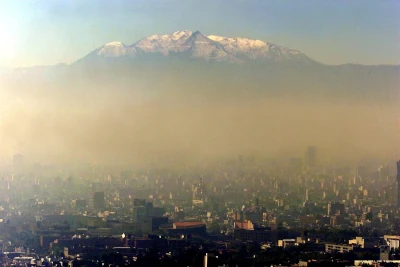
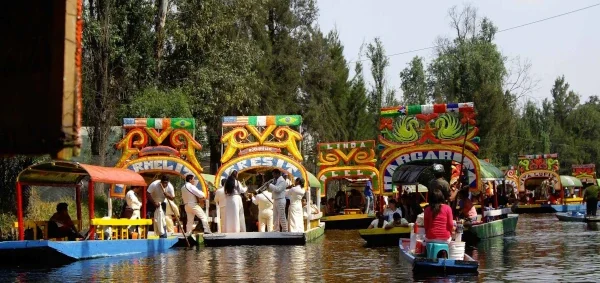
As the city continues its seemingly endless growth, declining water quality—caused by waste, fertilizers, pesticides, and industrial contaminants—has severely degraded the remaining aquatic ecosystems and reduced the quality of water available to the population. The geographical setting of Mexico City further worsens these environmental pressures. Surrounded by mountains and volcanoes, the Valley of Mexico forms a natural basin that can trap polluted air and smog over the metropolitan area. Compounding the problem, as rain falls through this polluted atmosphere, it carries airborne contaminants into the soil and waterways, further contributing to water degradation. Yet despite centuries of urban expansion, environmental damage, and ecological disruption, Lake Xochimilco, on the city’s southern outskirts, has miraculously endured as one of the last remnants of the ancient aquatic landscape that once covered the Valley of Mexico—and persists as the last natural habitat of the axolotl.
Although Xochimilco has remarkably endured, the number of wild axolotls living in its waters has declined alarmingly, from several thousand just a decade ago less than one hundred today. Evidently, we cannot simply breed more axolotls and release them back into polluted waters. If the species is to survive in the wild, its habitat must first be restored. The environmental crisis facing Mexico City may seem vast and overwhelming, but the solution begins at the smallest scale—by restoring an ancient agricultural system developed and used by the Aztecs: the chinampas.
A chinampa is a human-made agricultural plot constructed in the shallow waters of the ancient lake system of the Valley of Mexico. By transforming the marshy landscape into fertile farmland, chinampas allowed the Aztecs to produce the food needed to sustain the rapidly growing population of Tenochtitlan, the capital of their empire. In very simplified terms, the Aztecs constructed chinampas by accumulating layers of mud, sediment, and decaying vegetation and reinforced by wooden stakes, gradually transforming shallow wetlands into fertile agricultural fields that rose above the water level.By the time the Spaniards arrived in 1519, Tenochtitlan had grown into one of the largest cities in the world—a remarkable testament to the success and productivity of the chinampa system.
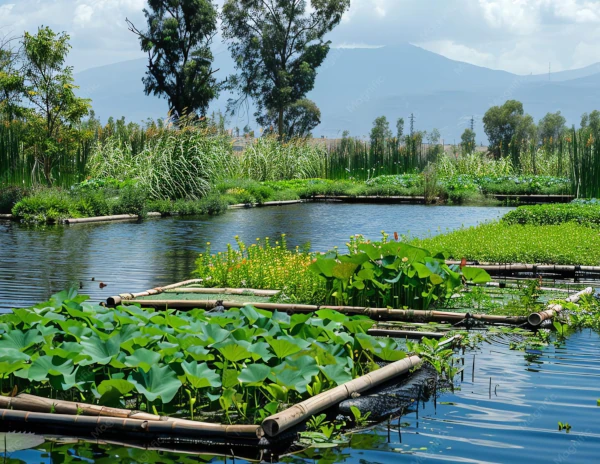

Among the leading voices in axolotl conservation and the restoration of their natural habitat is Dr. Luis Zambrano of the National Autonomous University of Mexico (UNAM). His research has focused on restoring the ecosystem, improving water quality, and developing sustainable conservation strategies for Xochimilco. His Adopt an Axolotl initiative encourages people to contribute to conservation efforts, helping ensure that future generations will still have the opportunity to encounter this extraordinary animal in its natural habitat: Xochimilco.
In other words, we must restore the ecological health of Xochimilco’s waters by reducing waste and other contaminants, while reviving the ancient chinampa system within which wild axolotls once flourished. At the heart of this approach is the creation of chinampa refuges, which are essentially ecological sanctuaries that use biofilters and protective barriers within the canals of Xochimilco to improve water quality and create safer habitats for axolotls. At the same time, they help restore the centuries-old connection between water, soil, and agriculture that lies at the heart of the chinampa tradition.
A question naturally arises: Why is it so important to protect axolotls in the wild when so many already exist in laboratories? The answer is that an axolotl living in an aquarium can never truly replace one living in the complex natural environment that shaped its biology over thousands of years. Over time, animals adapted to life in captivity may lose characteristics essential for survival in the wild. This occurs because captive populations often descend from a relatively small number of ancestors, which can reduce genetic diversity over generations.
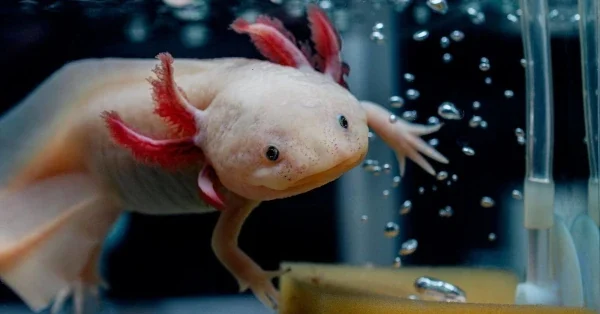
Evolution has spent millions of years refining biological solutions that scientists are only beginning to understand. If the axolotl disappears from the wild, genetic adaptations shaped by its natural environment could be lost with it, taking away invaluable biological insights that may one day contribute to advances in medicine. Every wild axolotl protected in its natural habitat helps preserve the remarkable traits that make this species so valuable to science—and the possibility of future discoveries in wound healing, spinal cord repair, heart disease, organ regeneration, and degenerative disorders. Every species lost represents the disappearance of an irreplaceable library of genetic information and scientific potential. In the case of the axolotl, extinction in the wild could mean losing biological adaptations we have yet to fully understand. Saving the axolotl is therefore not simply about restoring its habitat or ensuring that this captivating salamander can once again thrive in the waters of Xochimilco, but far more importantly, about preserving a genetic code that science has only begun to decipher—a biological legacy millions of years in the making that may one day deepen our understanding of regeneration, healing, and the human body itself.
Beyond Popularity: Turning Awareness into Conservation
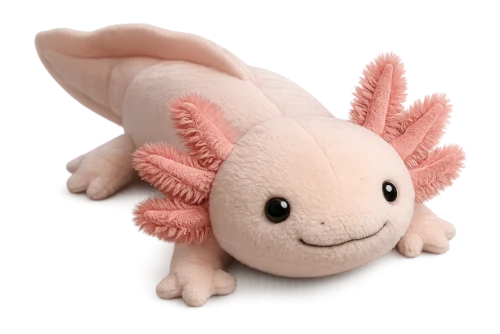

The axolotl has become an international cultural phenomenon, extending far beyond the exotic pet world. Its instantly recognizable smile and distinctive external gills can now be found across social media, clothing, toys, artwork, video games, cartoons, banknotes, and countless other expressions of popular culture. Its friendly appearance and distinctive external gills give the axolotl an immediately recognizable personality.Nowhere, however, is the axolotl more beloved than in its birthplace, Mexico City.
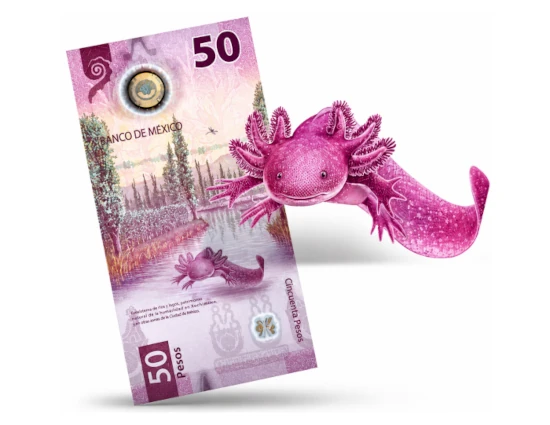
Perhaps no other animal—or symbol, for that matter—captures the identity of Mexico City as completely as the axolotl. While the picturesque waters of Xochimilco remain its biological home, Mexico City has become its cultural home, where its image has spread from murals, graffiti, and countless expressions of popular culture to more official symbols of recognition, appearing on public transportation and even the nation’s banknotes. Yet there is a striking contradiction: the axolotl has never been more visible, while its existence in the wild has never been more fragile. The challenge now is to transform this extraordinary popularity into a force for its survival.
Any artistic representation should invite the viewer not simply to admire it, but ultimately to understand what it represents, transforming the work into a means of awareness and a catalyst for conversation. In the case of the axolotl, its extraordinary popularity must go beyond fascination and recognition; popularity must translate into awareness, conversation, and ultimately, action toward its conservation.
Every image of the axolotl—whether in souvenirs, collectibles, or art—is an opportunity not only to tell the story of Mexico’s rich cultural history and Xochimilco’s unique ecological and cultural heritage, but also to draw attention to the species’ uncertain future. Its remarkable popularity must become a means of raising public awareness and inspiring collective responsibility to protect the environment on which its survival depends. We must carry the story of the great Tenochtitlan, Xochimilco, Mexico City, and the axolotl beyond the borders of Mexico and share their history and cultural significance with an international audience. In doing so, we can help preserve the axolotl, its natural habitat, and its invaluable genetic code—a biological and medical treasure endemic to Mexico, but one whose preservation is of importance to all humankind and future generations.
(Click to enlarge)

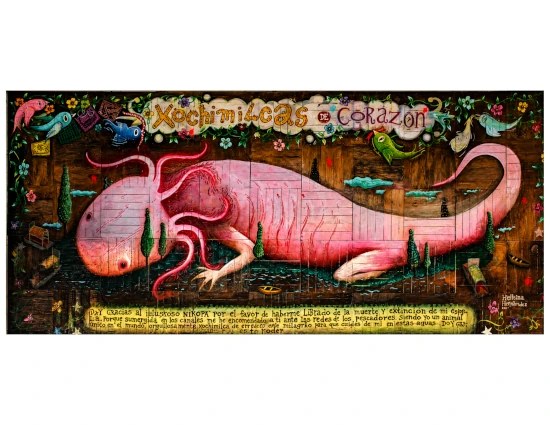
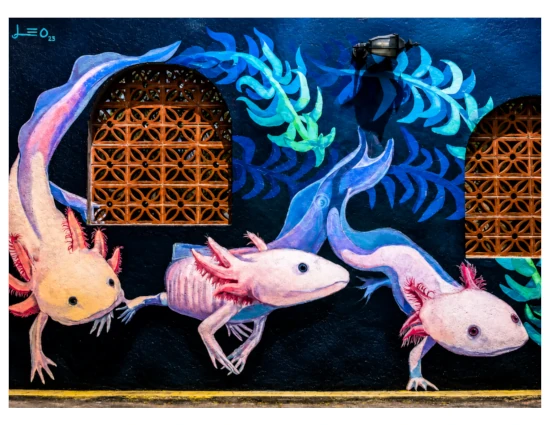
(Click to enlarge)

Virgen Conquistadora, Click to enlarge.
Click to learn more about the author
Bertha Cuéllar Aguilar is a Mexican artist whose work is deeply inspired by Spanish colonial art, sacred iconography, and the rich traditions of Mexican folklore. Drawing from Mexico’s extraordinary artistic heritage in painting and sculpture, she revives traditional techniques to preserve craftsmanship and artistic practices that have gradually faded over the centuries. Among her most distinguished creations are her hand-carved cedarwood sculptures.
Her work has been exhibited in museums and galleries throughout Mexico, the United States, the United Kingdom, and France, including a special invitation to exhibit at the Hermès flagship boutique on Rue du Faubourg Saint-Honoré in Paris


Tik-Tok