Home

Your Account

Shopping Cart

Contact


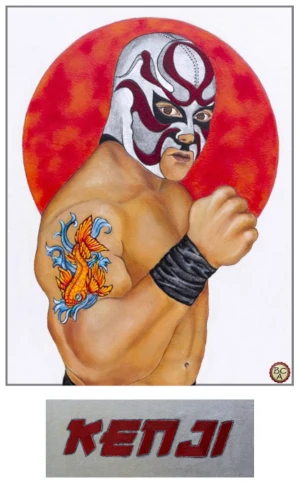
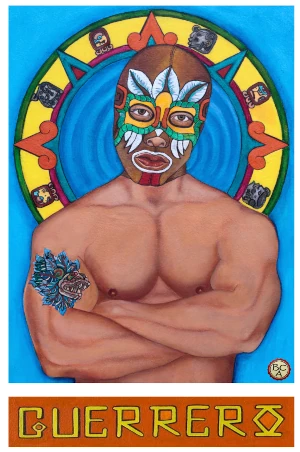



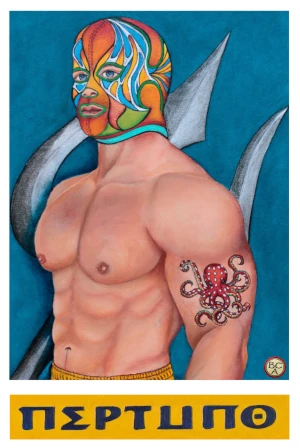
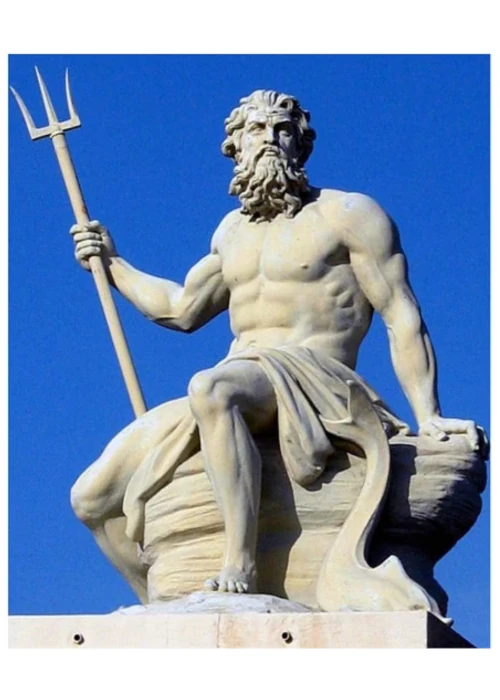

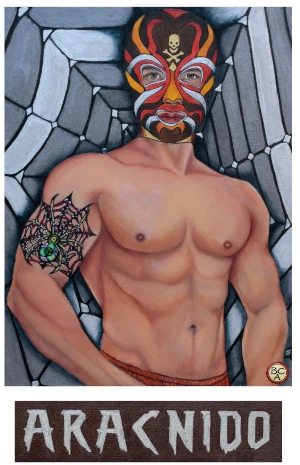
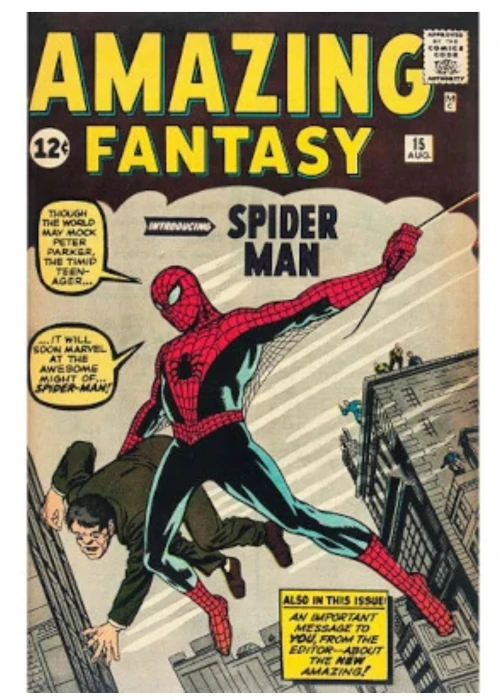

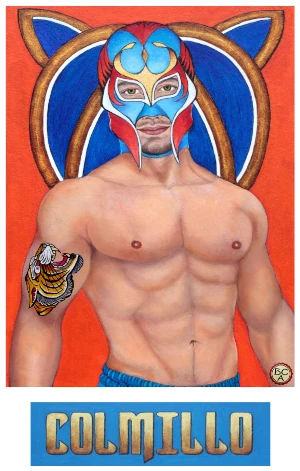

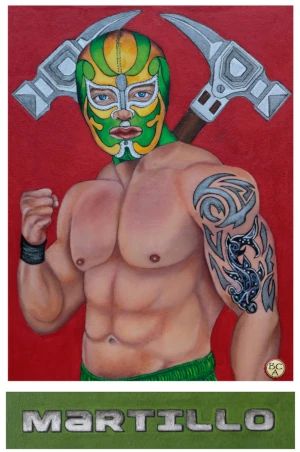

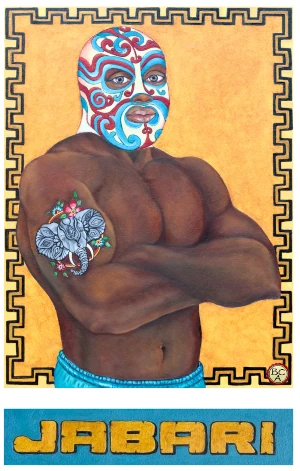
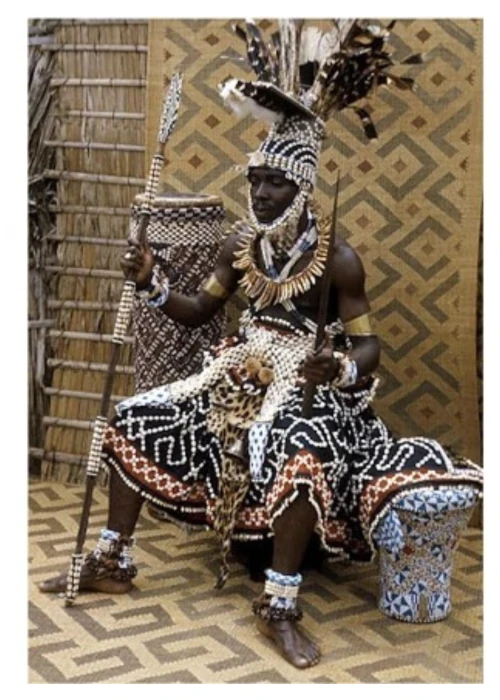
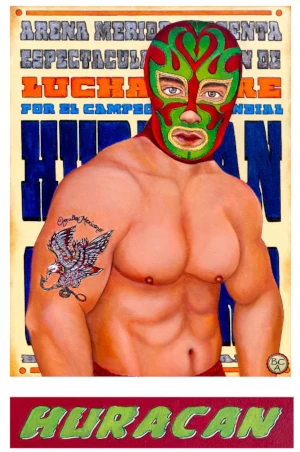
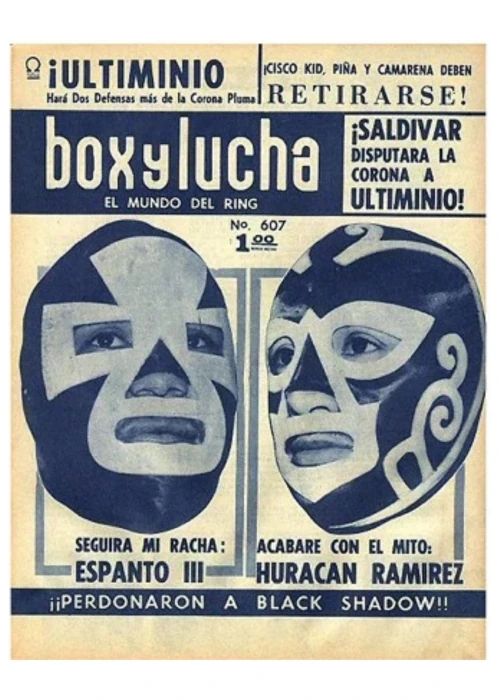
This series of nine masked luchadores explores symbols drawn from diverse cultures, expressed through their tattoos, masks, and backgrounds. Each figure embodies a distinct cultural and racial narrative while remaining rooted in the theme of Lucha Libre.
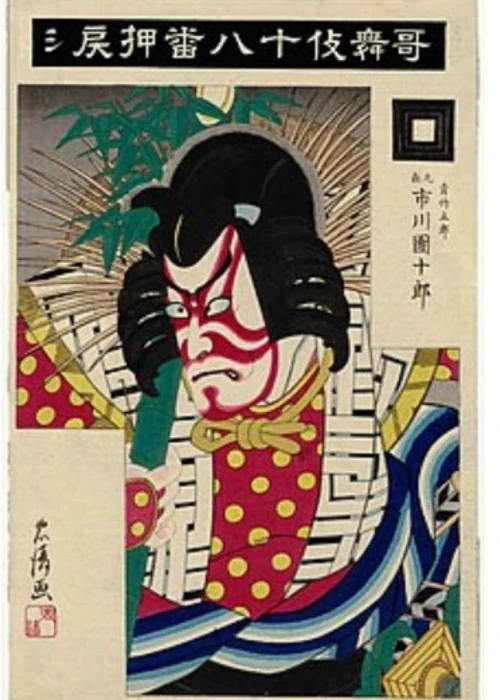
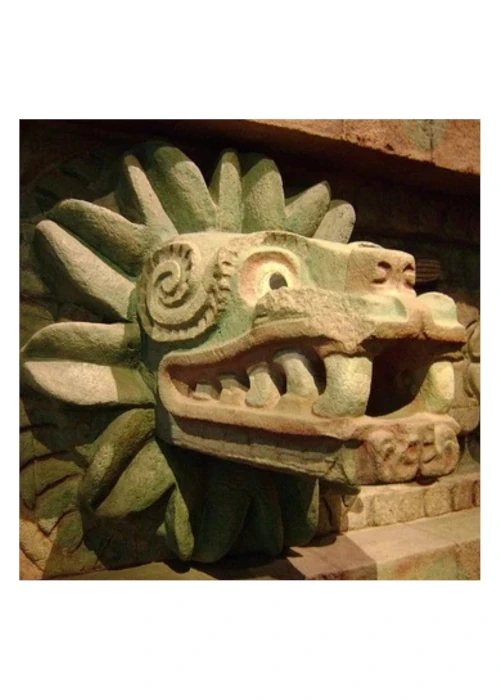
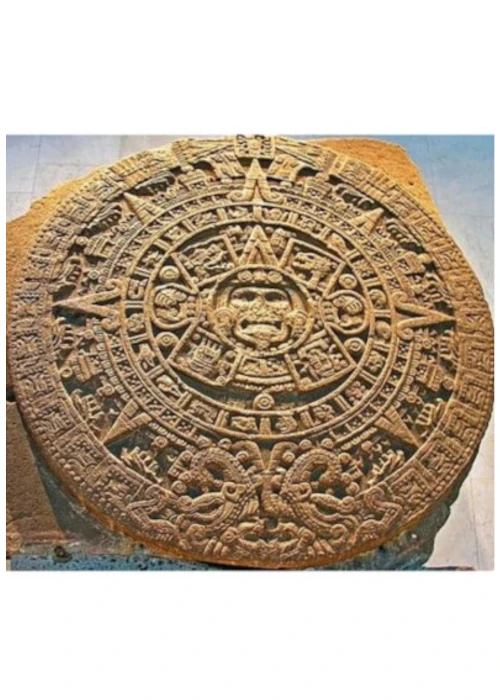
To begin, Kenji’s mask fuses kabuki-kumadori makeup with a red koi tattoo—an emblem of strength and perseverance in Japanese culture—framed by a Rising Sun motif. Appropriately, the Japanese name Kenji is associated with strength and vitality. Drawing from Mesoamerican pre-Hispanic culture, Guerrero incorporates a Quetzalcóatl tattoo, jade inlays on his mask, and a much-simplified interpretation of the Aztec calendar in the background.
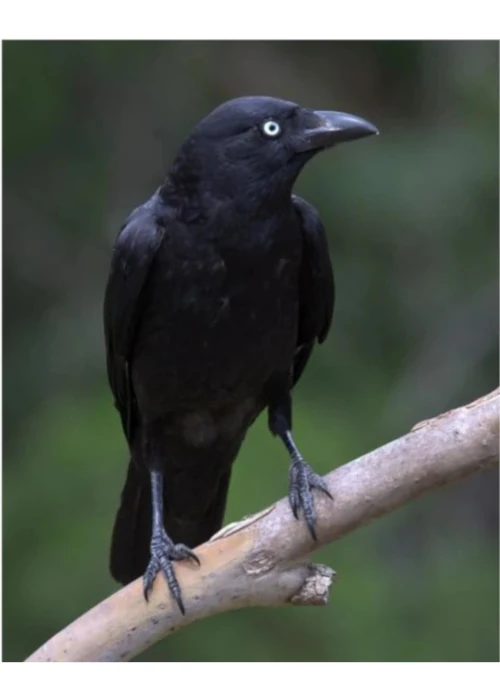
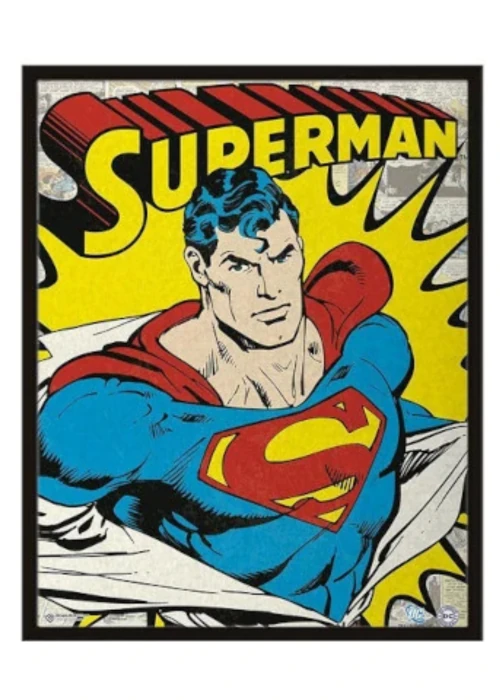
Mystical symbolism also plays a central role. Crow features a dreamcatcher inspired by Native American traditions, while Neptuno is distinguished by a trident drawn from Roman mythology. In contrast, Arácnido and Colmillo evoke contemporary action heroes, recalling figures such as Spider-Man and Superman.
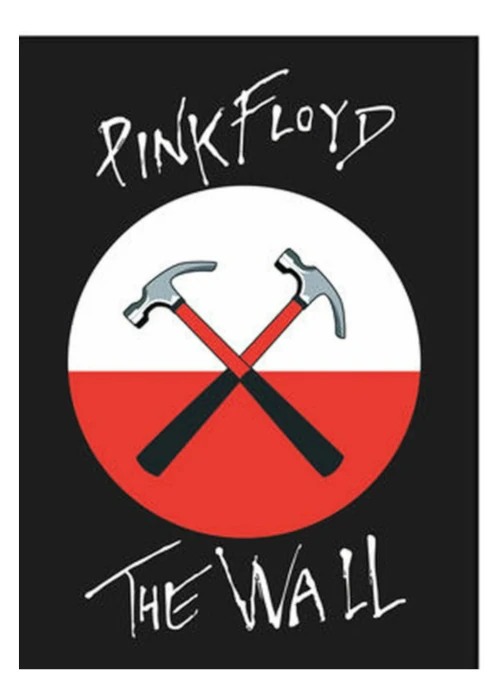
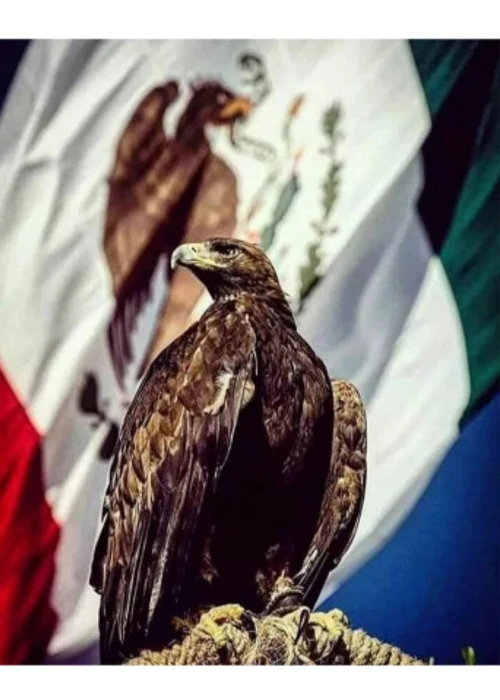
Modern cultural references further enrich the series, as the crossed hammers in Martillo’s background allude to Pink Floyd and modern music culture. Jabari’s design highlights African heritage through symbolic imagery and a Swahili name meaning “brave.” Finally, contemporary Mexico is personified in Huracán, whose imagery includes the eagle and serpent from the national flag, the phrase “Orgullo Mexicano” (“Mexican Pride”), and a lucha libre cartel in the background.
Together, these nine masked luchadores form a tribute to cultural and racial diversity.
Exuberant Masks and Fantastic Cinema: The Spirit of Mexican Lucha Libre
Body-to-body combat has been a constant presence throughout human history, making it one of the oldest forms of athletic competition. Historians generally trace the roots of modern wrestling to the inclusion of amateur wrestling in the 1896 Olympic Games. However, professional wrestling in its hybrid form—combining sport and theatrical entertainment—emerged in the early 20th century in the United States. Today, the three countries where this spectacle-based version of wrestling is most popular are Mexico, the United States, and Japan.
In Mexico, the first professional wrestling matches—known as Lucha Libre—took place in the 1930s, largely due to promoter Salvador Lutteroth. After witnessing a wrestling match in El Paso, Texas, Lutteroth brought a group of American wrestlers to Mexico. On September 21, 1933, the first professional match was held in what would later become the cathedral of Mexican wrestling: Arena México.
Lucha Libre quickly evolved into a powerful social phenomenon, surpassed in popularity only by soccer. Its distinct identity is defined by spectacular acrobatics, dramatic storytelling, and a rich folkloric dimension. Beyond athletic performance, two elements have been central to setting Mexican Lucha Libre apart from its international counterparts: its imaginative masks and the legendary Lucha Libre films of the mid-20th century.
Click to enlarge
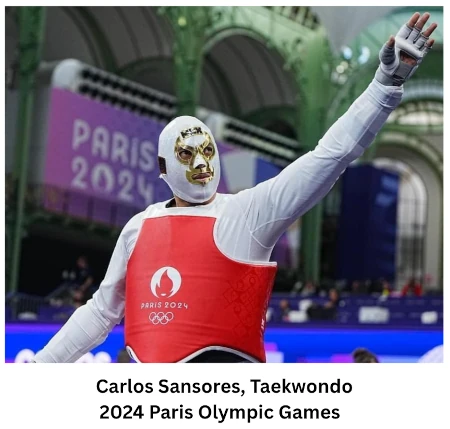
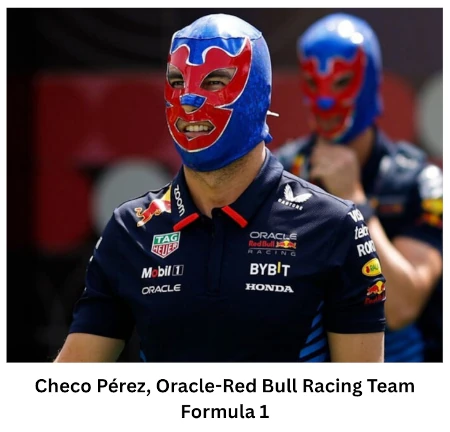
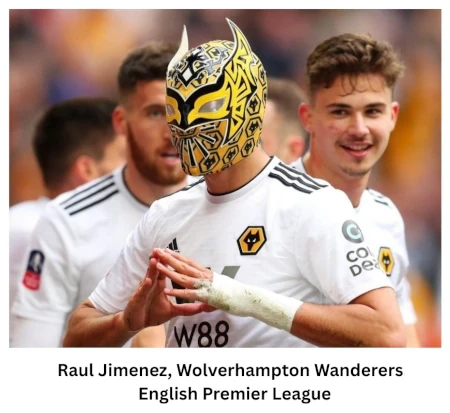
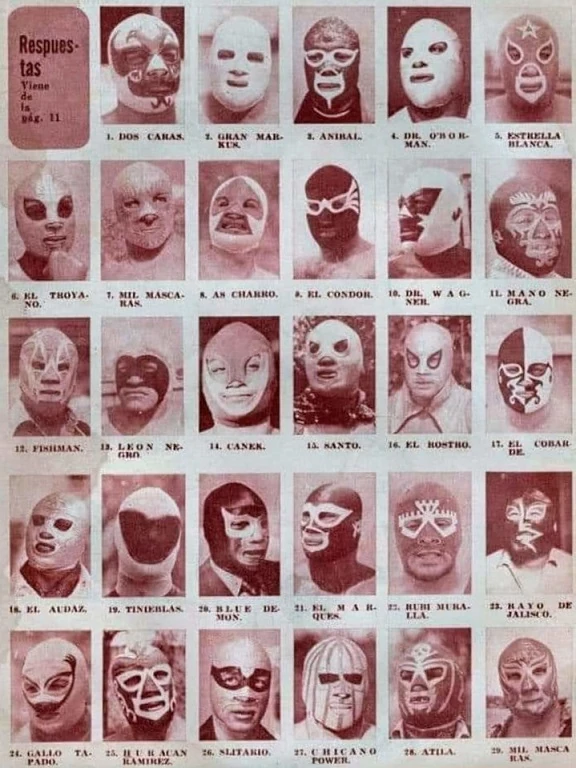
Lucha Libre in Mexico cannot be conceived without its iconic and often extravagant máscaras, or masks. Interestingly, the first wrestling mask worn in Mexico did not belong to a Mexican luchador but to an American wrestler. In 1931, Corbin James Massey—known as Masked Wonder—became the first to compete masked in Mexico, wearing a simple black mask. However, it was not until the 1950s that masks became central to Mexican wrestling culture, popularized by legendary figures such as El Santo, Blue Demon, Mil Máscaras, and Huracán Ramírez. In more recent decades, this tradition has continued through stars such as Tinieblas, Atlantis, Octagon, and Mistico. Through their mystique, anonymity, and symbolism, lucha libre masks transcended the ring to become internationally recognized symbols of Mexican identity.
Equally significant in elevating the popularity of Mexican wrestling was the Lucha Libre Film Era (1950–1980). These films brought masked heroes to the silver screen, where they embarked on fantastical adventures to save the world. Luchadores confronted an extraordinary range of adversaries—vampires, mummies, monsters, mad scientists, and even Martians—battling in surreal settings that included Atlantis, alien spacecraft, and Dracula’s castle. Today, these films are considered cult cinema and constitute a unique genre with a devoted fan base not only in Mexico but also in Europe. Notably, the French National Cinémathèque houses the largest collection of Mexican Lucha Libre films in the world.

Success is never a straight line
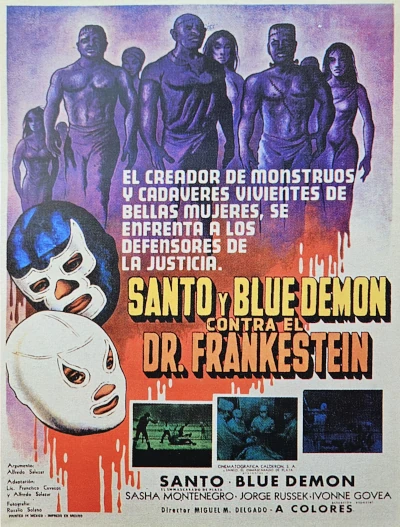
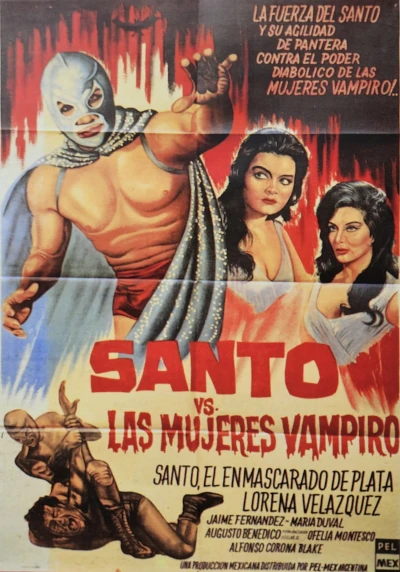
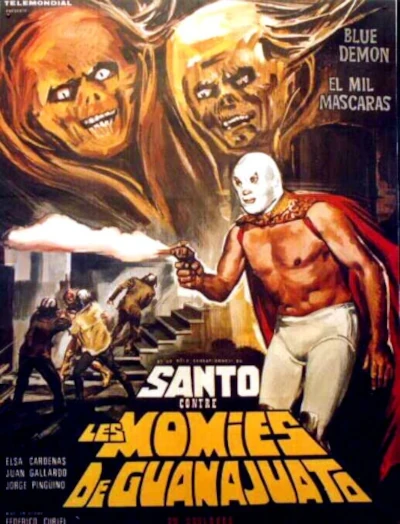
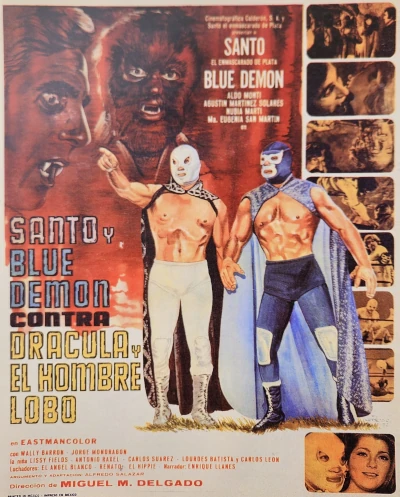
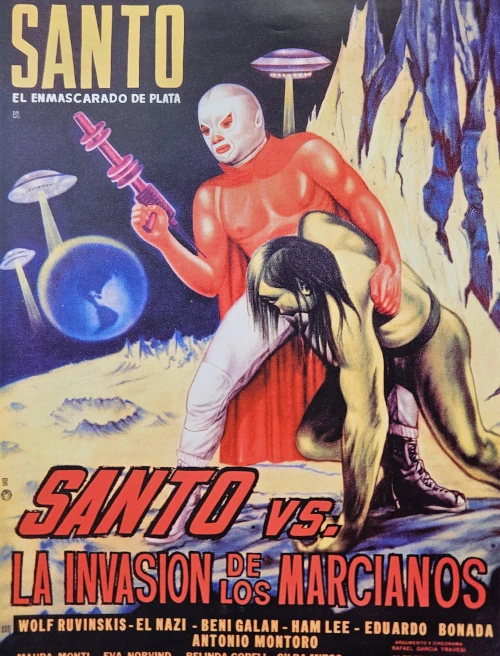
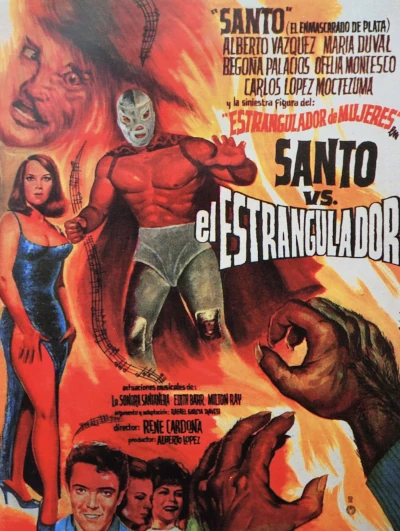
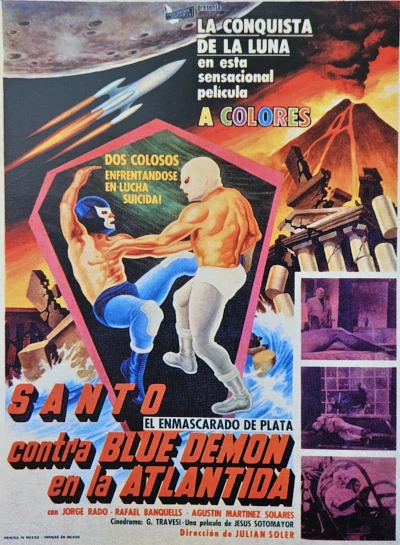
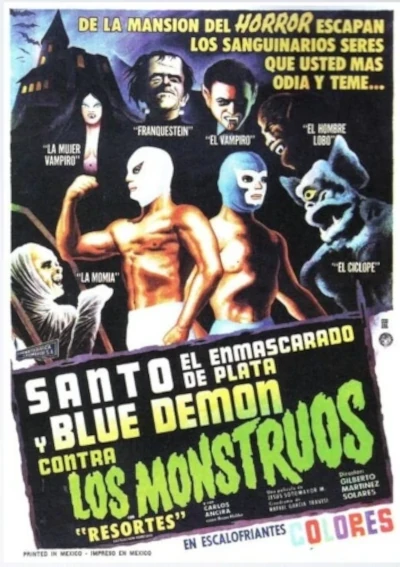
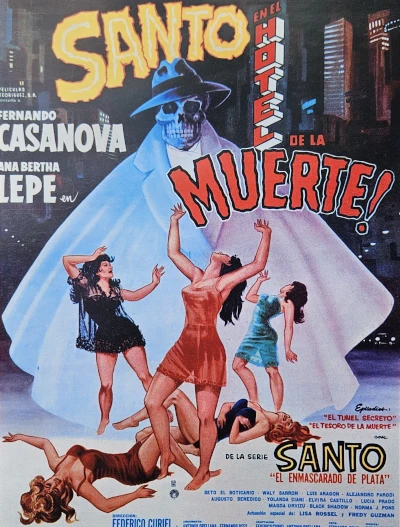
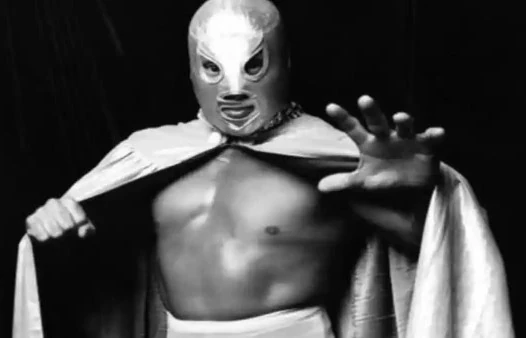
It is widely understood that for a professional wrestler—or luchador—to achieve success, he must adopt a carefully constructed fictional persona. This performative identity encompasses personality traits, a distinctive name, tone of voice, signature moves, attire, and, in many cases, a mask. Far from being superficial, this personification becomes an extension of the individual himself and must be thoughtfully conceived, as it can ultimately determine the difference between anonymity and legend.
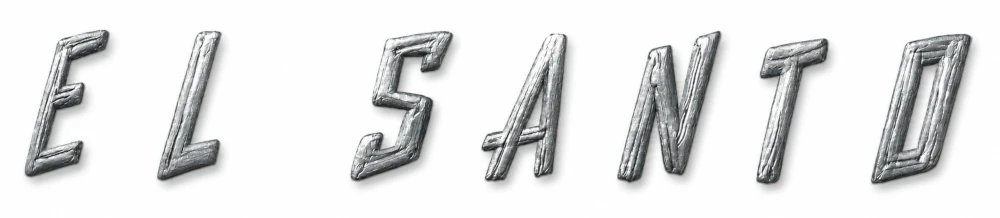
What is less commonly known is that the greatest Mexican luchador of all time, Rodolfo Guzmán Huerta, famously known as El Santo, experimented with numerous personas before finding the one that would define his legacy. Early in his career, Guzmán wrestled under his real name, Rudy Guzmán, and later adopted a series of aliases, including Hombre Rojo, Enmascarado, Murciélago, and Demonio Negro. None of these identities resonated with the public.
It was not until 1942, following the casual suggestion of a referee, that Guzmán adopted the name El Santo, inspired by the American comic strip and film character The Saint. With that seemingly simple change, a legend was born (Jiménez Ruiz, En el ring de la historia, Artes de México, 2016, pp. 118–119).
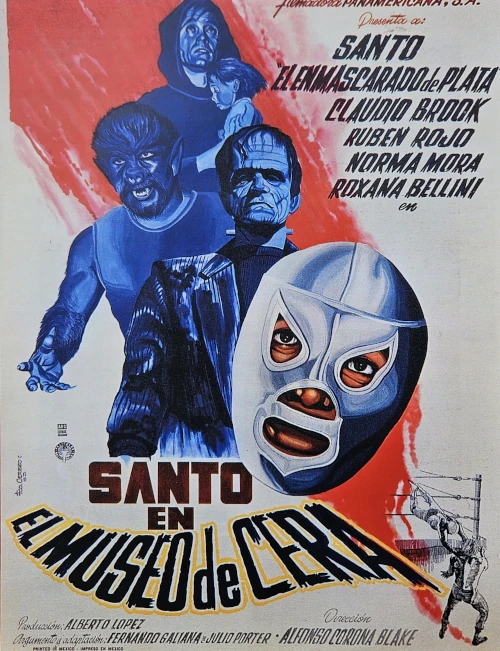
El Santo’s career spanned nearly five decades, during which he became the most iconic figure in the history of lucha libre. He captured multiple championships, including Mexican National and NWA world titles, and built a reputation as a virtually unbeatable, heroic competitor through dominant performances and numerous mask-versus-mask victories. Beyond the ring, he became a cultural icon by starring in more than fifty lucha libre films—blending action, horror, and fantasy, often battling vampires, mummies, and mad scientists—achieving a mythic status in Mexican popular culture comparable to Pedro Infante and Cantinflas.
Rodolfo Guzmán’s persistent search for the right persona reveals a deeper truth: success is never a straight line. His journey underscores the importance of adaptability, resilience, and a willingness to adapt to change. Rather than viewing setbacks as failures, Guzmán treated them as opportunities to refine his craft and evolve. In this way, his story serves as a powerful reminder that when one path does not lead to success, it may instead be guiding us toward the path that ultimately shapes who we are meant to become.
“Nothing in this world can take the place of persistence. Talent will not; nothing is more common than unsuccessful men with talent. Genius will not; unrewarded genius is almost a proverb. Education will not; the world is full of educated derelicts. Persistence and determination alone are omnipotent. The slogan ‘Press On!’ has solved and always will solve the problems of the human race.”
The Holly Trinity of Japanese Wrestling: Rikidozan, Tiger Mask and Mil Máscaras
While studying high school in Switzerland and later attending college in France during the 1980s-90s, I formed close friendships with many Japanese students. I even shared an apartment with a Japanese roommate and had a girlfriend from Japan. Since then, I had always been deeply curious about visiting the country. In October 2024, I finally made that long-awaited journey—traveling to Japan with my mother.
One of the aspects that struck me most, especially in contrast to my home country of Mexico, was Japan’s impeccable sense of order and cleanliness. The streets were flawless, free of potholes; buildings were meticulously maintained, with no chipped paint or broken windows. People carried themselves with elegance and formality, and children were astonishingly quiet and well-behaved. At times, it felt as though I had landed on another planet.
Before traveling, I was already aware that professional wrestling holds an important place in Japanese popular culture, ranking among the country’s most-watched sports after baseball and martial arts. Still, I found it fascinating—and even paradoxical—that such a disciplined, orderly, and restrained society would embrace a form of entertainment as theatrical, colorful, and seemingly chaotic as professional wrestling. This curiosity led me to conduct further research, through which I identified three figures who played a decisive role in shaping and popularizing wrestling in Japan: Rikidozan, who embodied postwar nationalism; Tiger Mask, an anime hero brought to life in the ring; and Mil Máscaras, the most influential Mexican wrestler in Japanese history.
RIKIDOZAN: A MUCH-NEEDED SUPERHERO
In the aftermath of World War II, Japan endured immense human and psychological loss. Approximately two million Japanese soldiers perished during the war, and an estimated quarter of a million civilians were killed in the atomic bombings of Hiroshima and Nagasaki in 1945. Beyond the devastation, Japan was forced to surrender, demilitarize, and endure occupation by United States forces. The defeat dealt a profound blow to national pride, leaving the population heartbroken, humiliated, and resentful.
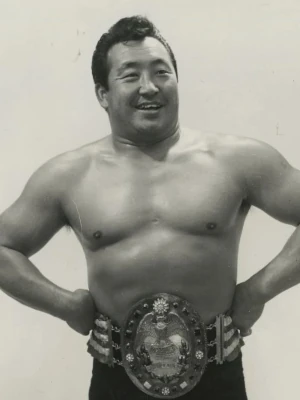
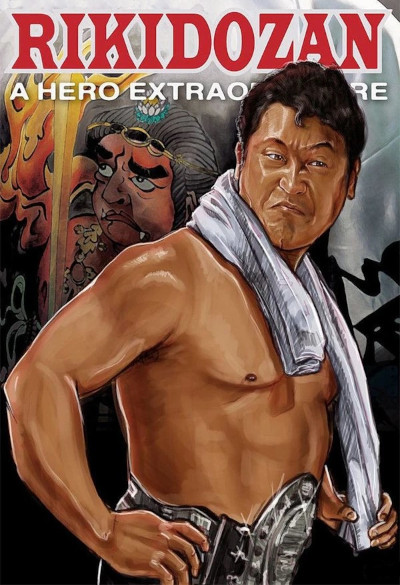
Within this context of collective despair, the Japanese people desperately needed a symbol of resilience and hope. That figure emerged in Rikidozan, a former sumo wrestler who made his professional wrestling debut in 1951, while the nation was still recovering from wartime trauma. His most iconic moment came in 1958, when he defeated American wrestler Lou Thesz. Though professional wrestling is scripted, the symbolism of this victory was powerful: Rikidozan was perceived as an indomitable hero capable of defeating foreign adversaries.
Through his performances, Rikidozan restored a sense of pride and confidence to the Japanese people. His success elevated professional wrestling into the mainstream, laying the foundation for its enduring popularity in Japan.
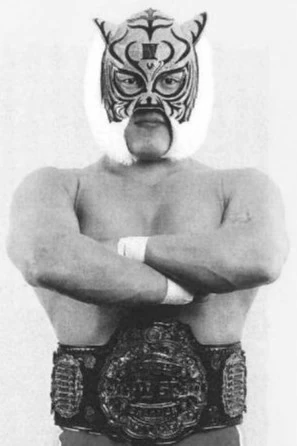
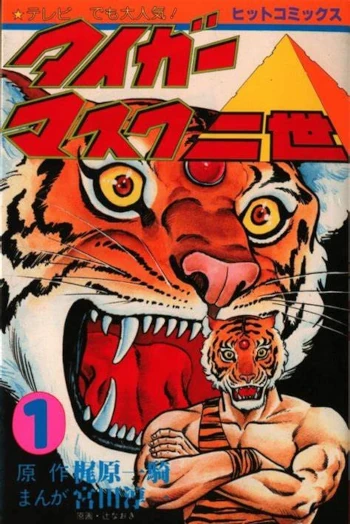
TIGER MASK: FROM ANIME ICON TO LIVING LEGEND
Another pivotal figure in the rise of Japanese wrestling was Satoru Sayama, who brought to life the anime character Tiger Mask. Originally published as a weekly manga in Shūkan Shōnen, the story followed Naoto Date, a fictional orphan forced to wrestle while wearing a tiger mask. The character gained widespread admiration for his bravery and moral code, particularly because he was said to donate his earnings to the orphanage where he was raised.
In 1968, Sayama—an accomplished martial artist—adapted Tiger Mask into a real-life wrestling persona. This transformation proved revolutionary. At a time when wrestling largely emphasized ground-based techniques, Tiger Mask introduced high-flying aerial maneuvers that were virtually unseen anywhere in the world. His athleticism and innovation stunned audiences and forever changed the language of professional wrestling.
In 1981, the rights to the Tiger Mask character were acquired by New Japan Pro Wrestling (NJPW), the second-largest wrestling promotion in the world. Since then, four different wrestlers have portrayed Tiger Mask, turning the character into one of the most enduring and iconic identities in global wrestling history.
MIL MÁSCARAS: THE MOST FAMOUS MEXICAN IN JAPAN
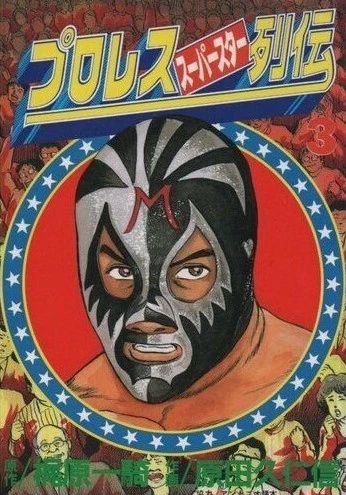
During the 1960s, Mexican masked wrestlers such as Huracán Ramírez, Dos Caras, and Tinieblas made occasional promotional tours in Japan. Building upon these early encounters, the first Mexican wrestler to establish a sustained presence in Japan was Mil Máscaras. Widely regarded as one of professional wrestling’s first true international superstars, Mil Máscaras debuted in Japan in 1971, defeating Kantaro Hoshino in Tokyo.
From that moment onward, Mexican lucha libre masks—or máscaras—captured the imagination of Japanese audiences. Their mystique, craftsmanship, and symbolism resonated deeply within Japanese wrestling culture. Today, it is common to find T-shirts, stickers, and merchandise in Japan featuring Mexican masked luchadors, often accompanied by Spanish words such as máscara or lucha libre.
Mil Máscaras’ influence extended far beyond his own matches. Inspired by his legacy, wrestlers from both Japan and Mexico have crossed the Pacific to train, perform, and exchange styles. These cultural ties endure today through formal collaboration agreements between New Japan Pro Wrestling and Mexico’s Consejo Mundial de Lucha Libre (CMLL)—a testament to the lasting dialogue between two wrestling traditions that, while distinct, share a deep respect for spectacle, honor, and myth.
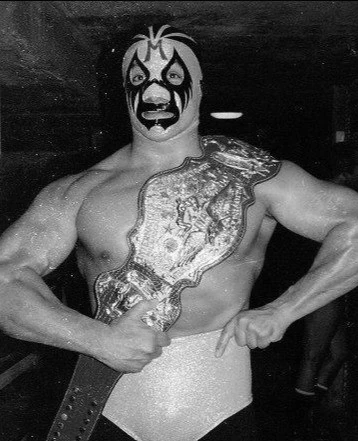
¡Queremos Sangre!
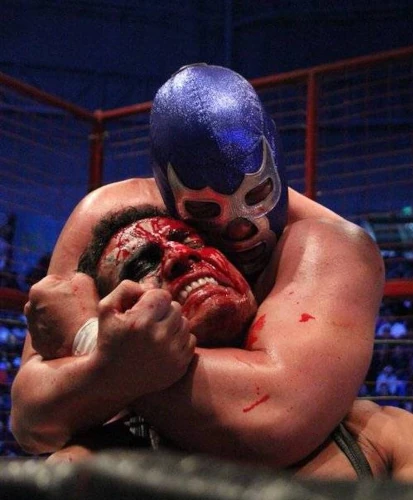
Lucha libre is widely recognized as a sport-spectacle—carefully choreographed to a certain degree. Yet this very control does not prevent matches from unraveling unexpectedly. Spectators are fully aware that the action follows a script; however, when blood suddenly appears during a bout, the audience’s perception shifts dramatically. The staged performance becomes visceral and immediate. Blood functions as a powerful emotional catalyst, collapsing the distance between fiction and reality, and stands as one of wrestling’s most morbid yet compelling attractions.
It is worth noting that Mexico is one of the countries with the largest and most passionate wrestling fan bases in the world—a fact that aligns, perhaps uncomfortably, with the nation’s violent history. From the human sacrifices practiced by the Aztecs, to the Mexican Revolution—which claimed the lives of more than two million people—and continuing into the contemporary war against drug trafficking, violence and bloodshed appear recurrently across different periods of Mexican history.
Historians have documented that, each year, thousands of individuals were sacrificed by the Aztecs, who believed that human blood was essential to sustaining cosmic balance and appeasing the gods. Less widely known, however, are other blood-centered rituals practiced within the Aztec Empire, such as the Flower Wars, or Xochiyaoyotl. These were ritualized battles to the death involving captured warriors from rival city-states. Like human sacrifice, Xochiyaoyotl functioned as a macabre ceremonial practice in which violence and bloodshed were not only accepted but exalted.
Although Lucha Libre does not involve death or actual sacrifice, its exaggerated combat, theatrical violence, and ritualized structure can be interpreted as an echo—albeit symbolic—of these ancient ceremonial traditions. The ring becomes a contemporary arena where aggression is stylized, controlled, and mythologized, transforming violence into spectacle rather than destruction.
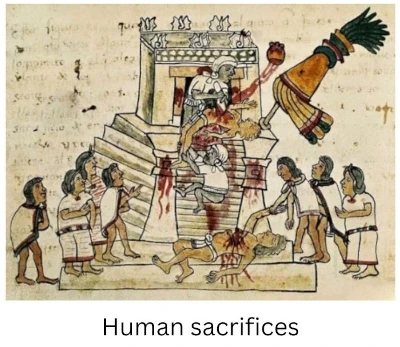
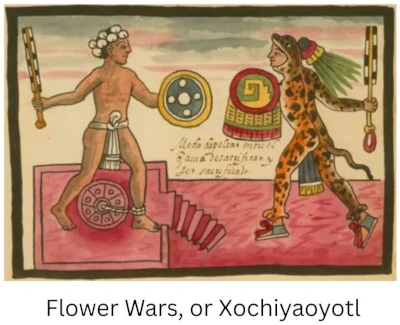
“Wrestling in Mexico… a popular redoubt where unconcealed passions ignite and find refuge… Rebellious spectators who shout, ‘We want blood!’—perhaps imagining the sacrifices of the Templo Mayor—names that erupt as grunts of staged fury and the symphonic roar of falling bodies.”
Carlos Monsiváis.
The 1985 earthquake, Super Barrio, and the birth of democracy.
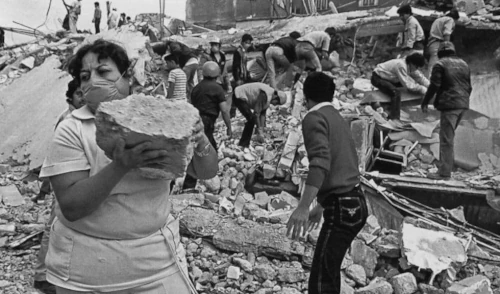
On Thursday, September 19, 1985, an earthquake measuring 8.1 on the Richter scale struck Mexico City, unleashing a devastating wave of destruction and loss. For those who lived through the tragedy, it left an indelible mark that endures to this day.
Among its many consequences was a severe housing crisis. Rent-controlled landlords attempted to exploit the destruction as a pretext to evict tenants, arguing that damaged buildings could no longer be rented under existing legal conditions. In response, grassroots organizations such as the Asambleas de Barrios (“Neighborhood Assemblies”) emerged to defend tenants’ rights. From this movement arose a striking and unexpected figure: a masked luchador known as Super Barrio, who became its public face.
In a moment of profound vulnerability and social injustice, Super Barrio was embraced as a symbolic avenger—a popular hero defending the poor against predatory landlords. Drawing on the visual and moral language of lucha libre, the character transformed political protest into a form of theatrical resistance, making activism more visible, accessible, and emotionally resonant.
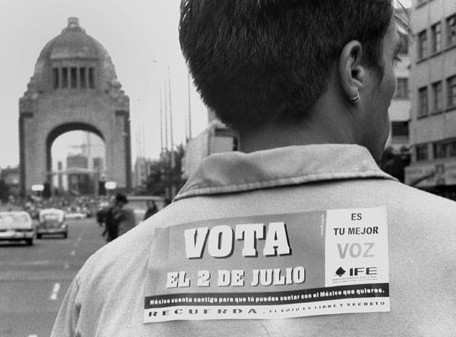
Beyond housing rights, Super Barrio promoted civic engagement and became involved in Mexico’s broader struggle for democracy in the years that followed. His symbolic influence peaked when he was proposed as a presidential candidate; although he declined and instead supported Cuauhtémoc Cárdenas in the 1988 election, the gesture underscored his cultural and political significance. While the idea of a masked luchador as president may appear humorous, his legacy reveals something far more profound: the capacity of popular culture—particularly lucha libre—to channel collective frustration, articulate political dissent, and imagine alternative forms of leadership when traditional institutions fail.
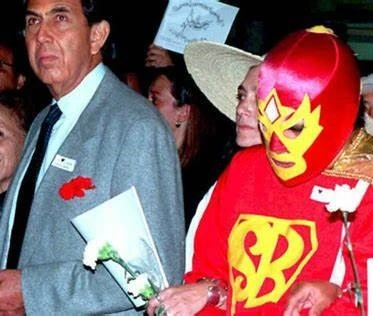
Presidential Candidate C. Cárdenas and Super Barrio
The earthquake is widely regarded as the beginning of the decline of the Institutional Revolutionary Party (PRI), which had ruled Mexico for decades as a de facto one-party political system, as it exposed the government’s slow, ineffective response under President Miguel de la Madrid and eroded public trust in it. Right after the tragedy, De la Madrid alarmingly went as far as to declare that Mexico did not need help from other nations, but the fact was that it was in urgent need of assistance from abroad, which was later accepted. Meanwhile, ordinary citizens organized rescue brigades and grassroots movements—symbolized by figures like Super Barrio—demonstrating unprecedented civic participation that challenged the regime’s authority. This surge in civic engagement marked a shift in Mexican society, as people increasingly questioned the legitimacy and effectiveness of the PRI.
Lucha Libre, a cleansing effect
Life is no fairy tale, and consciously or unconsciously, spectators attend lucha libre arenas as a means of releasing stress—an outlet often unavailable in other areas of their daily lives. Building on this idea, Sigmund Freud, in works such as Group Psychology and the Analysis of the Ego and Civilization and Its Discontents, argued that societies must provide mechanisms through which individuals can discharge repressed impulses in order to preserve social order. This necessary emotional release, known as catharsis, produces a cleansing effect. It is for this reason that we often feel relief after a hearty laugh, a good cry, or the simple act of sharing our emotions with others.
Beyond this cathartic function—here understood as the emotional discharge experienced by spectators—it is also revealing to examine how individual behavior is transformed within certain collective contexts. Human conduct changes markedly when one becomes part of a crowd, and lucha libre arenas are no exception. The theory of mass psychology explains how individuals immersed in large groups become more susceptible to collective emotion and suggestion. Surrounded by others, the individual feels anonymous, protected, and emboldened, allowing emotions that are normally repressed to surface freely.
In the specific context of lucha libre, this phenomenon can reach surprising extremes. Spectators, including elderly attendees, have been known to verbally—and at times physically—confront not only other audience members but even the luchadores themselves. Such moments reveal how the arena becomes a socially sanctioned space for emotional excess, where ordinary behavioral boundaries are temporarily suspended.
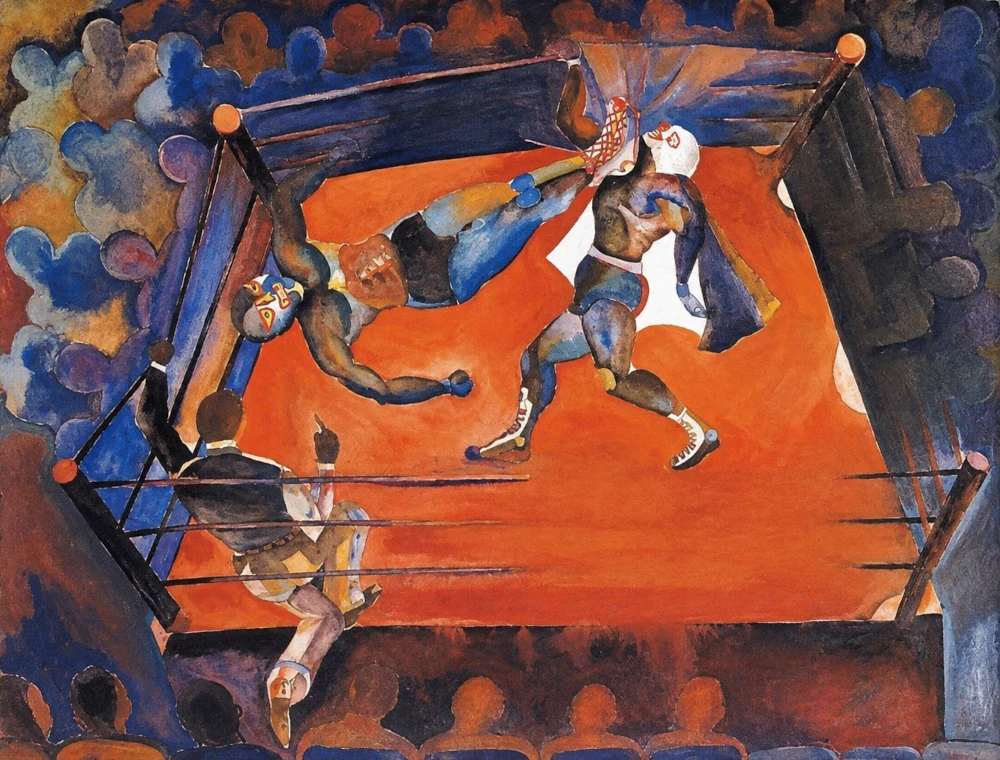
Francisco Toledo, Luchadores. (Click to Enlarge)
Francisco “Paco” Díaz Cuéllar

It is our mission at Color Magenta, not only to make products
we are proud to sell, but also to deliver a message.
Click on the icons below to learn more about:





Tik-Tok